Our design chapter has been writing about system fidelity: moving fast without quietly breaking the system you’ll need to maintain tomorrow.
This post is the engineering sibling: what happens when you apply the same “Generate → Consolidate” logic to code, workflows, and shipping.
If you haven’t read the design piece yet, start here: Claude Code vs V0 for Design Engineering: how to prototype in code without breaking your design system.
The why (before the how)
We’re investing in a more opinionated Claude Code way of working for one simple reason:
AI makes it easy to create output. It does not automatically make that output shippable.
In practice, teams hit three predictable bottlenecks:
- Consistency: changes drift from patterns (style, architecture, security, accessibility, naming, conventions).
- Verification: “looks good” is not a test suite, and green CI isn’t the same as “safe in production”.
- Coordination: the hardest part is not writing code, it’s keeping shared context, decisions, and standards coherent across a team.
So our goal isn’t “let Claude write more code”.
It’s: shorten loops while keeping quality and risk under control.
This is also what we admire in how Intercom approaches it: they treat the agent setup as engineering infrastructure, not a personal productivity hack.
A quick primer (for non-engineers, and for engineers who like nouns)
When we say “Claude Code OS”, we mean a few concrete building blocks:
- Skills: packaged instructions + references + scripts. Think “mini playbooks” Claude can invoke.
- Hooks: rules that run before/after actions (e.g., block dangerous commands, auto-run checks).
- Progressive disclosure: Claude doesn’t load the whole universe; it pulls the right files at the right time.
- Verification: automated ways to prove a change works (tests, smoke flows, assertions, observability checks).
- Governance: ownership, versioning, and discoverability so the system scales beyond one power user.
If that sounds like process: correct.
The alternative is accidentally scaling chaos.
1) From prompts to institutional knowledge: skills as culture, not snippets
A good skill is not “a markdown file”.
It’s a folder with:
- a clear intent (“when to use this”)
- examples and gotchas
- optional scripts for repeatable work
- a verify step (“how we know it worked”)
At ~50–100 skills you’re no longer “configuring Claude”.
You’re codifying your engineering culture.
Our current buckets (where ROI actually shows up)
- Repo / library reference: “how we do X here” + gotchas
- Product verification: smoke flows, e2e drivers, assertions
- Data & observability: dashboards, query patterns, incident triage
- Automation: repeatable routines (release notes, dependency bumps, changelog)
- Review & quality: adversarial review, security checks, style guardrails

2) Context is expensive: progressive disclosure beats “load everything”
The anti-pattern is “stuff the prompt with everything we know”.
It feels safe, but it’s slow, costly, and increases instruction conflicts.
Pattern: thin start, thick when needed
- Start with minimal boot context (goal + constraints + Definition of Done)
- Use skills as entry points to deeper context
- Keep heavy reference docs in files Claude can open on demand (api.md, gotchas.md, examples/)

3) Versioning & governance: skill sprawl is real (and boringly fatal)
If skills become institutional knowledge, they need to be treated like code:
- ownership
- reviews
- changelog
- deprecations
- discoverability
What we’re experimenting with right now
- taxonomy prefixes per domain (
fe/,be/,ops/,data/) - a skill contract: intent, inputs/outputs, gotchas, verify step
- a weekly “skill release” cadence
- telemetry: usage logs to prune low-signal skills

4) Hooks are the real accelerator (and your safety net)
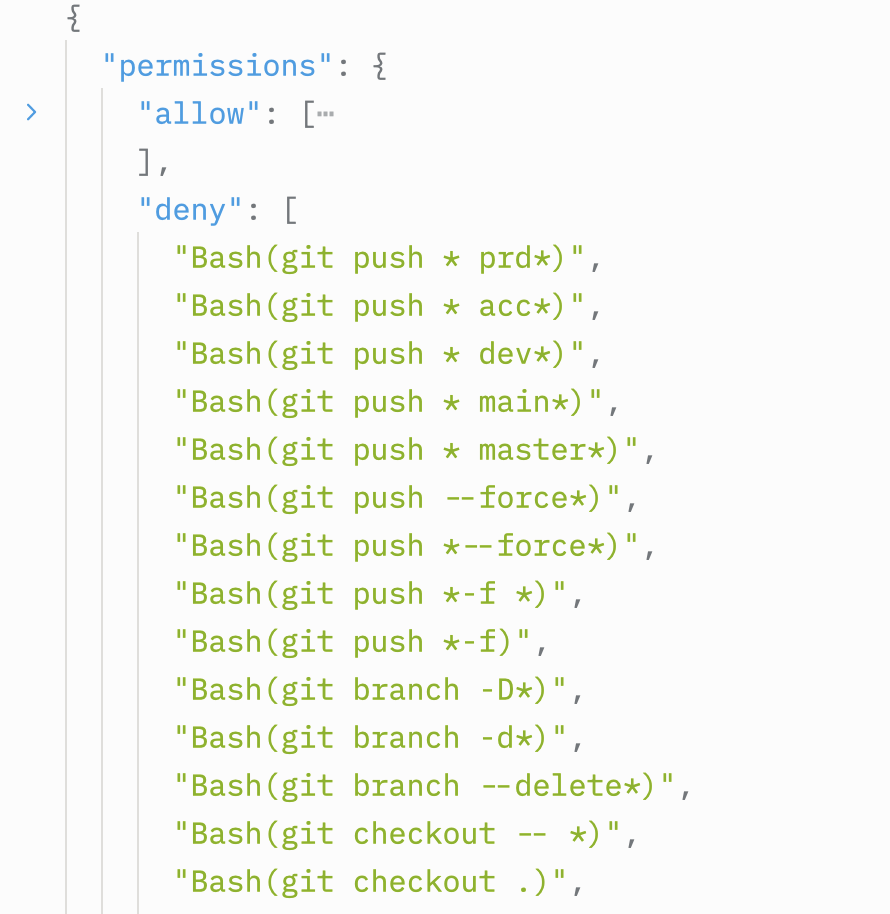
Hooks are one way to turn “best practices” into default behavior, but in practice, a lot of the guardrails live in your Claude Code config + skill-level allowlists.
In our workflow, this can show up as:
- Claude settings/config (e.g. settings files) that define defaults and constraints.
- Skill “allowed” config that limits which commands/tools a given skill can run (so safety is scoped by intent).
- Optional hooks where you want enforcement around actions (before/after), like blocking dangerous commands or automatically running checks.
The underlying jobs stay the same:
- Prevention: block risky actions (rm -rf, force push, destructive migrations)
- Verification: run checks after edits (lint/test/smoke)
We strongly prefer on-demand enforcement for highly restrictive modes (so it doesn’t annoy you all day), and default-on checks for always-useful verification.

5) “Fast lane” reviews: auto-approving safe PRs (with strict rules)
We’re exploring faster review loops, but only with an explicit risk model and it’s worth saying clearly: this is not fully “auto” yet in our current R&D.
Right now, the flow is closer to:
- a PM/designer/engineer manually triages what’s safe to pick up (often by tagging Claude in Slack)
- Claude drafts a PR
- the PR is still reviewed manually
“Fast lane” (auto-approval for truly low-risk changes) is a next phase once the workflow is no longer in beta.
Our proposal: 3 lanes
- Safe lane (auto-approve possible)
- docs, copy, non-prod config, refactors with no behavior change
- required: lint + unit tests + static analysis
- Normal lane
- feature work with limited blast radius
- required: reviewer + e2e smoke
- Critical lane
- auth, payments, permissions, data migrations, infra
- required: 2 reviewers + staged rollout + runbook
Feature flags are the bridge between speed and safety: ship small, validate in prod conditions, rollback without drama.
6) Read-only production introspection (soon): functional teams asking real questions safely
This is the most strategic unlock for us.
Imagine a world where PM/ops/CS can ask:
- “Did signups drop after yesterday’s release?”
- “Which cohort is failing onboarding?”
- “Is this issue limited to one tenant?”
…without raw production access.
What it requires (non-negotiables)
- allowlisted queries/commands
- rate limits
- PII redaction
- structured outputs (summaries, not dumps)
- audit trail

7) Failure modes (and how we prevent a haunted prompt mansion)
If we do this wrong, we’ll get:
- contradicting skills
- a bloated catalog nobody understands
- token waste
- false confidence (“green CI” ≠ safe behavior)
Our mitigations:
- one canonical skill per domain (single source of truth)
- deprecations that redirect
- progressive disclosure by default
- verification skills as first-class citizens
Conclusion
AI can accelerate delivery.
But only if you build the surrounding system: constraints, verification, and governance.
That’s what we’re building: a Claude Code OS that makes speed safe, and makes quality repeatable.
TBC ... 👀
