Building Takeda’s AI-native front door to market access

Client
Industry
Pharma · Market Access & Pricing

One intelligent workspace between evidence and reimbursement

Takeda’s medicines only reach patients once regulators accept the evidence and payers accept the price. That second step, market access, is getting harder: HTA bodies scrutinise data more closely, and every country runs its own dossier logic.

The work was spread across SharePoints, vendor reports and a dozen disconnected AI tools. Takeda’s market access teams needed one place to work, and a way to turn a growing estate of AI agents into something analysts would actually use.

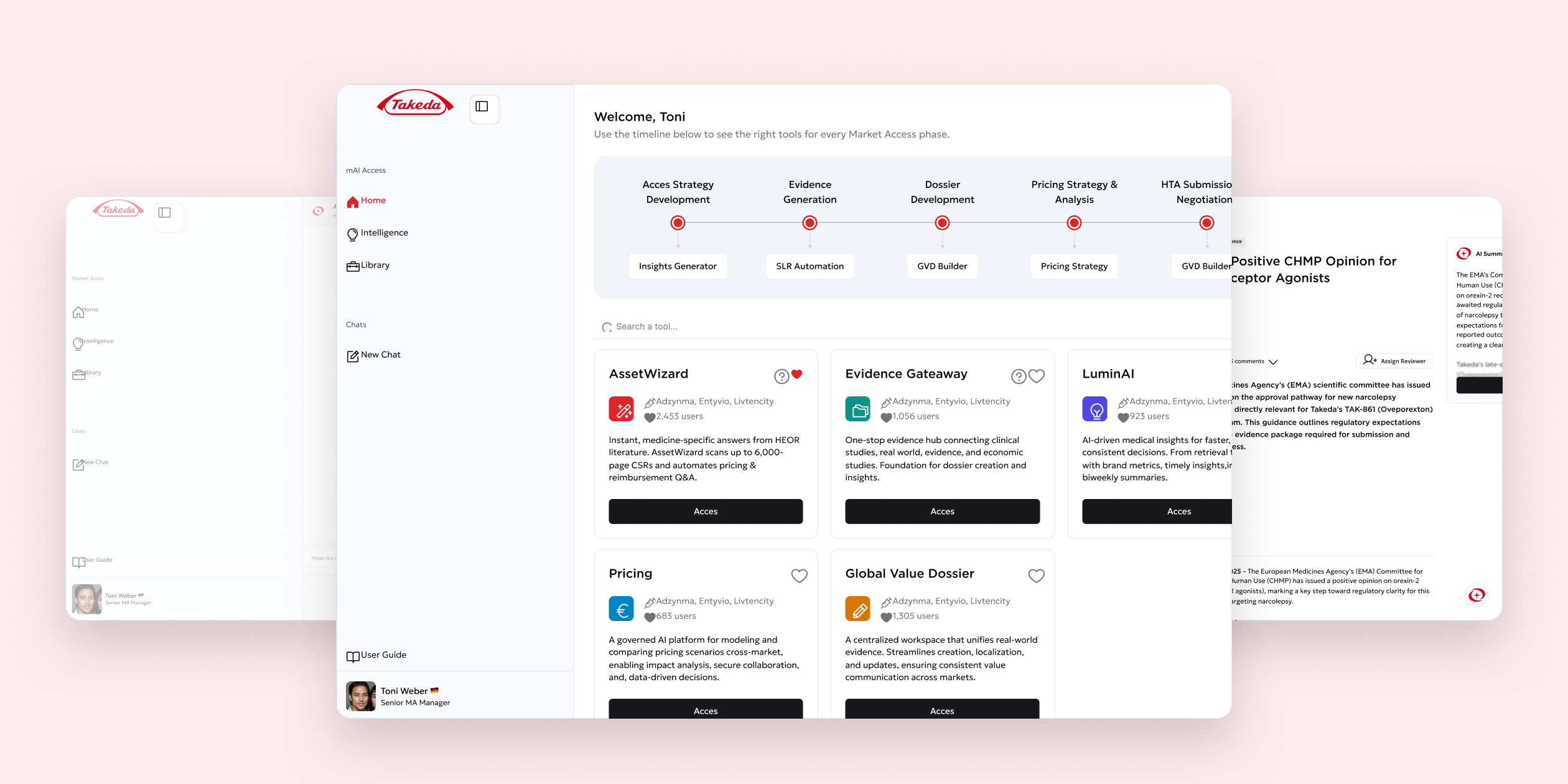
As Takeda’s strategy, design and engineering partner on mAI Access, we shaped the vision for an AI-native one-stop shop, prototyped it to CEO level, and engineered the experience layer that orchestrates Takeda’s AI capabilities: the One-Stop Shop, the embedded Asset Wizard, and the backend-for-frontend architecture that ties them together.
opportunity

For market access analysts

Finding existing evidence meant an email-driven hunt across SharePoints
Answering one payer question could mean reading a 6,000-page clinical study report by hand
Global templates rarely matched local HTA requirements, so affiliates rebuilt dossiers from scratch
Scenario building meant weeks of rework and slide shuffling before strategy could even start
Useful AI tools existed, but they were hidden, fragmented and inconsistent, so few people used them

For Takeda (Global, Regions & affiliates)

HTA bodies and payers grow more demanding of the data with every submission
Every major pharma company invests in GenAI; Takeda needed adoption beyond the pilot stage
Several squads and vendors built capabilities in parallel, with no shared experience layer holding them together
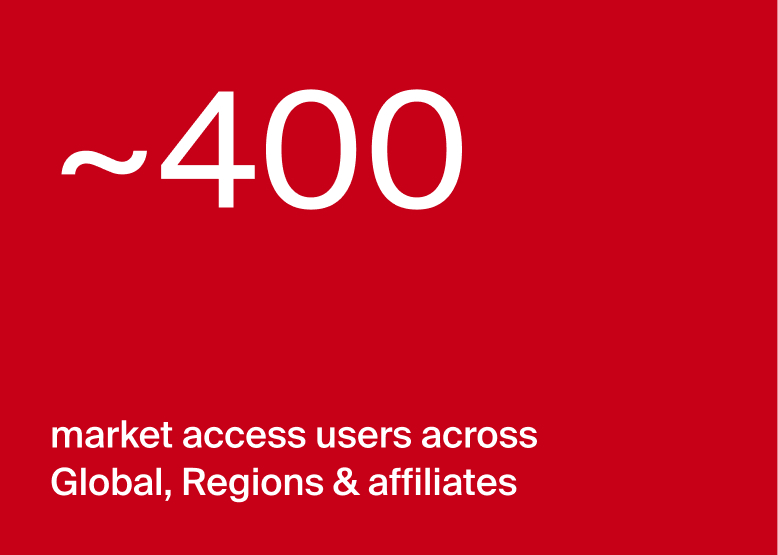
The ambition: a single orchestrator for all mAI agents, serving ~400 market access users
solution

Five tracks from vision to a live, AI-native platform

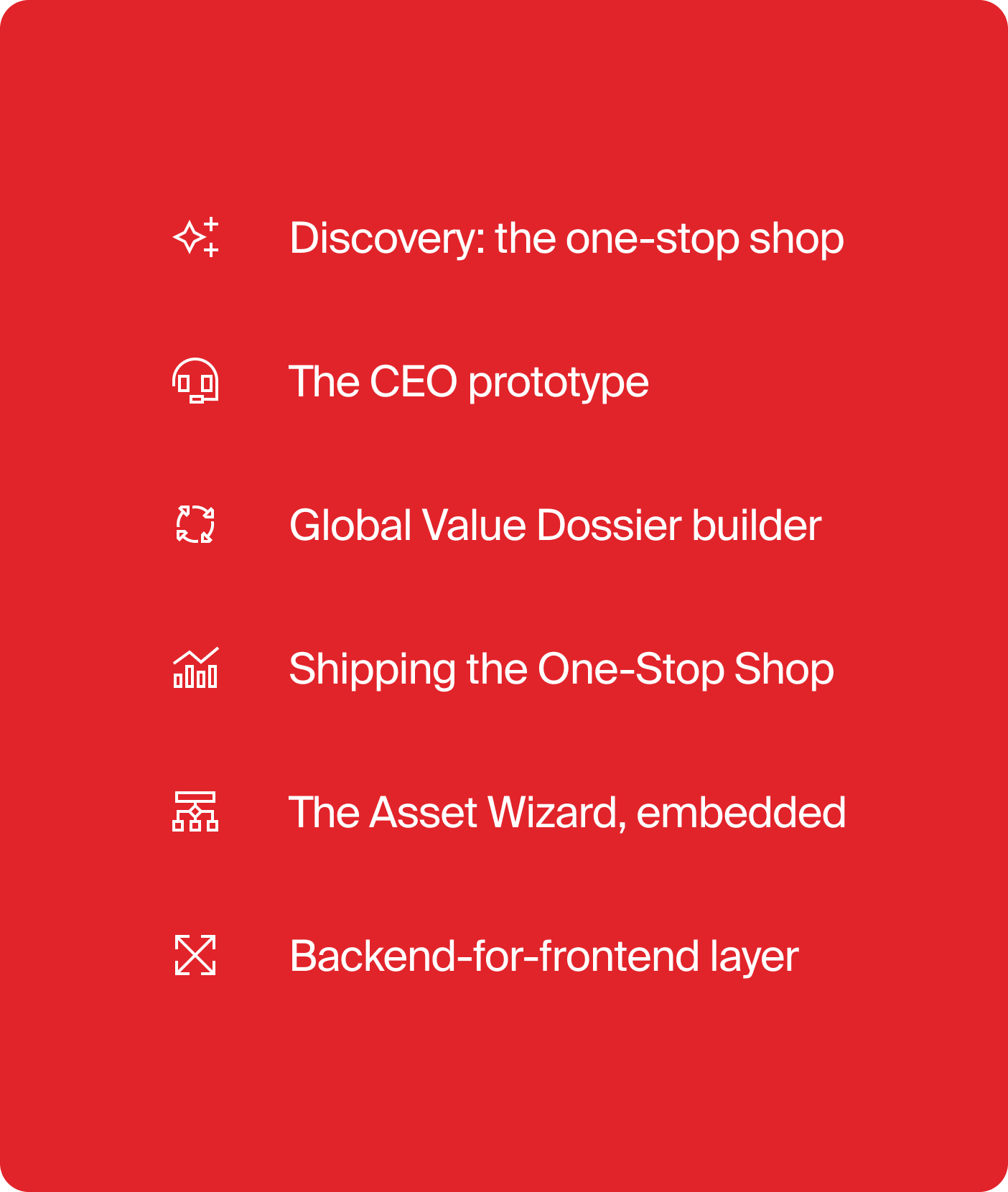
Discovery: framing the one-stop shop

Ten stakeholder interviews mapped every AI tool in Takeda’s market access landscape
Each tool charted with its pain points, owners and future role, from Evidence Gateway to SLR automation
Defined the north star: an agentic, intent-driven front end that orchestrates capabilities instead of listing them
Adoption first: findability in daily workflows, local usability and the terminology analysts actually use

The CEO prototype

A clickable, end-to-end prototype of the ideal state
A personalised home that knows each analyst’s assets and priorities
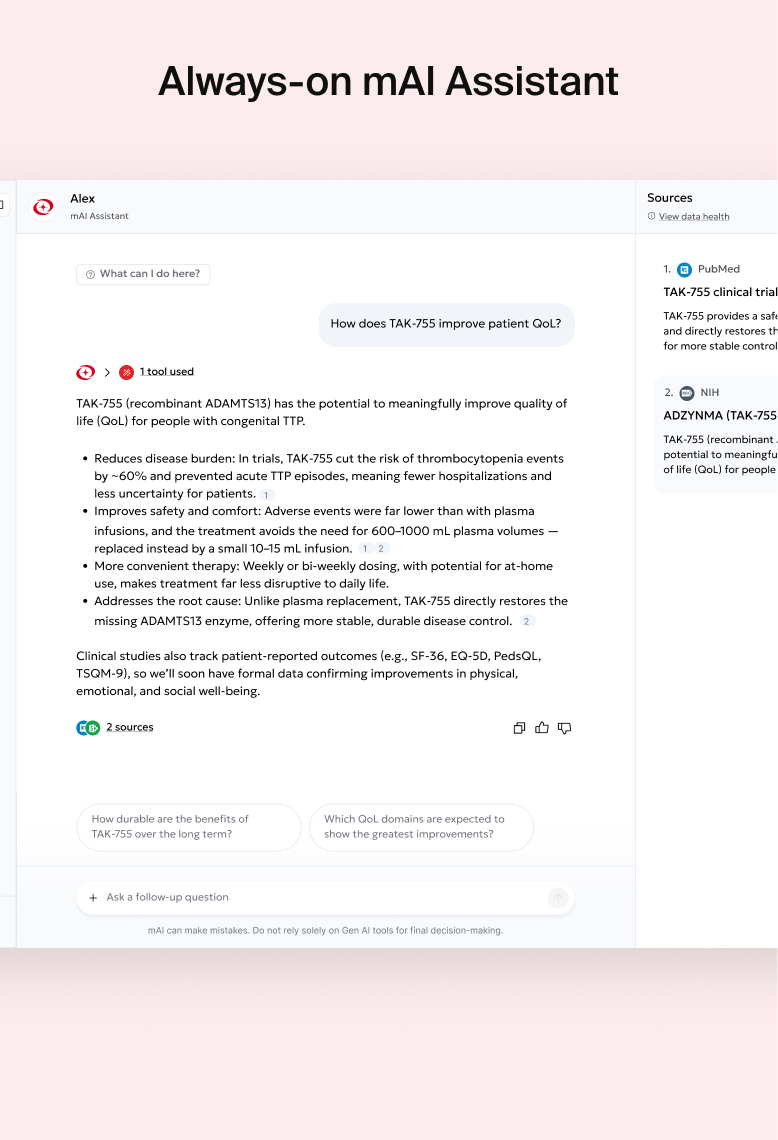
An always-on assistant next to a full Insights Generator flow
From HTA summary to gap analysis to scenario planning in one journey
Secured CEO buy-in and additional budget for the programme

Global Value Dossier builder

Template-led assembly with claim selection, evidence anchoring and review built in
Endorsed global content kept separate from localisable sections
Versioning, audit trails and export to payer templates such as AMNOG and NICE
Presented in Zurich and adopted as the first-module definition

Shipping the One-Stop Shop

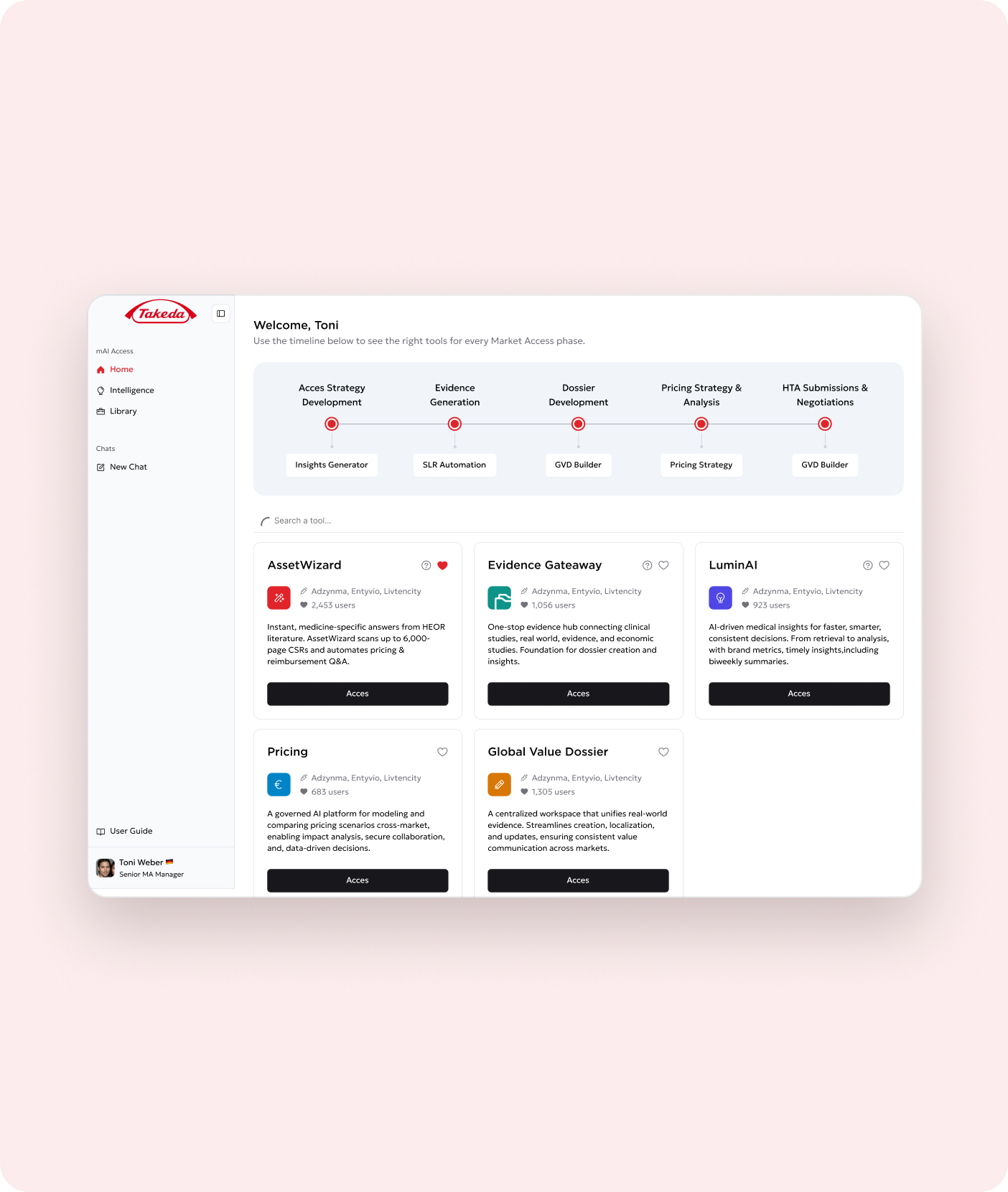
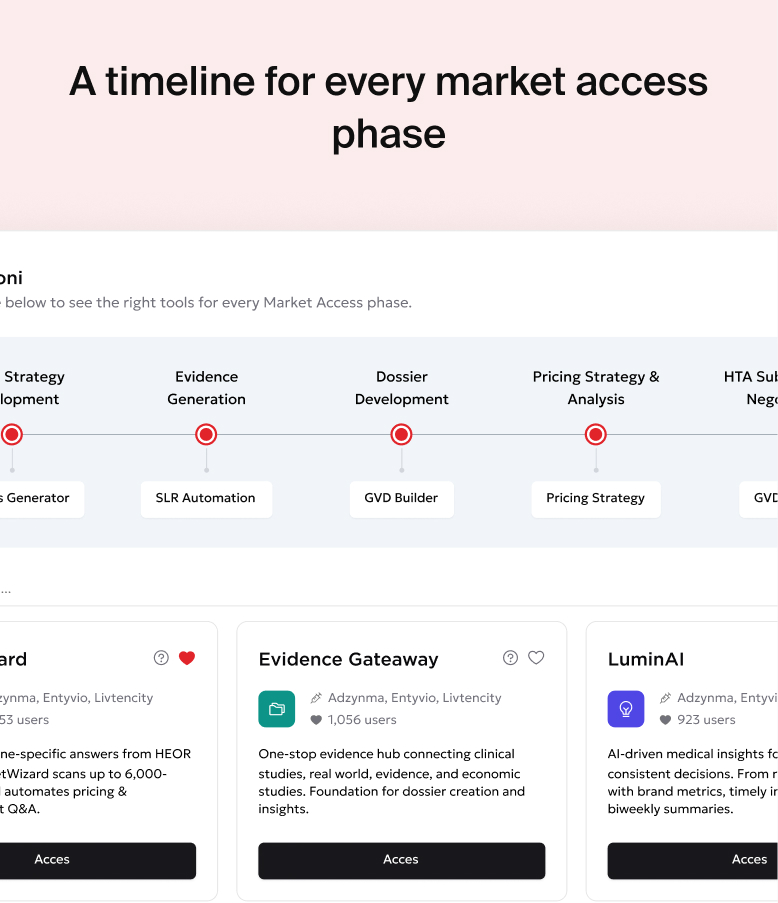
Rebuilt a static, SharePoint-like tool library into a modern React workspace
Role-aware navigation, tool categorisation and bookmarks for novices and experts alike
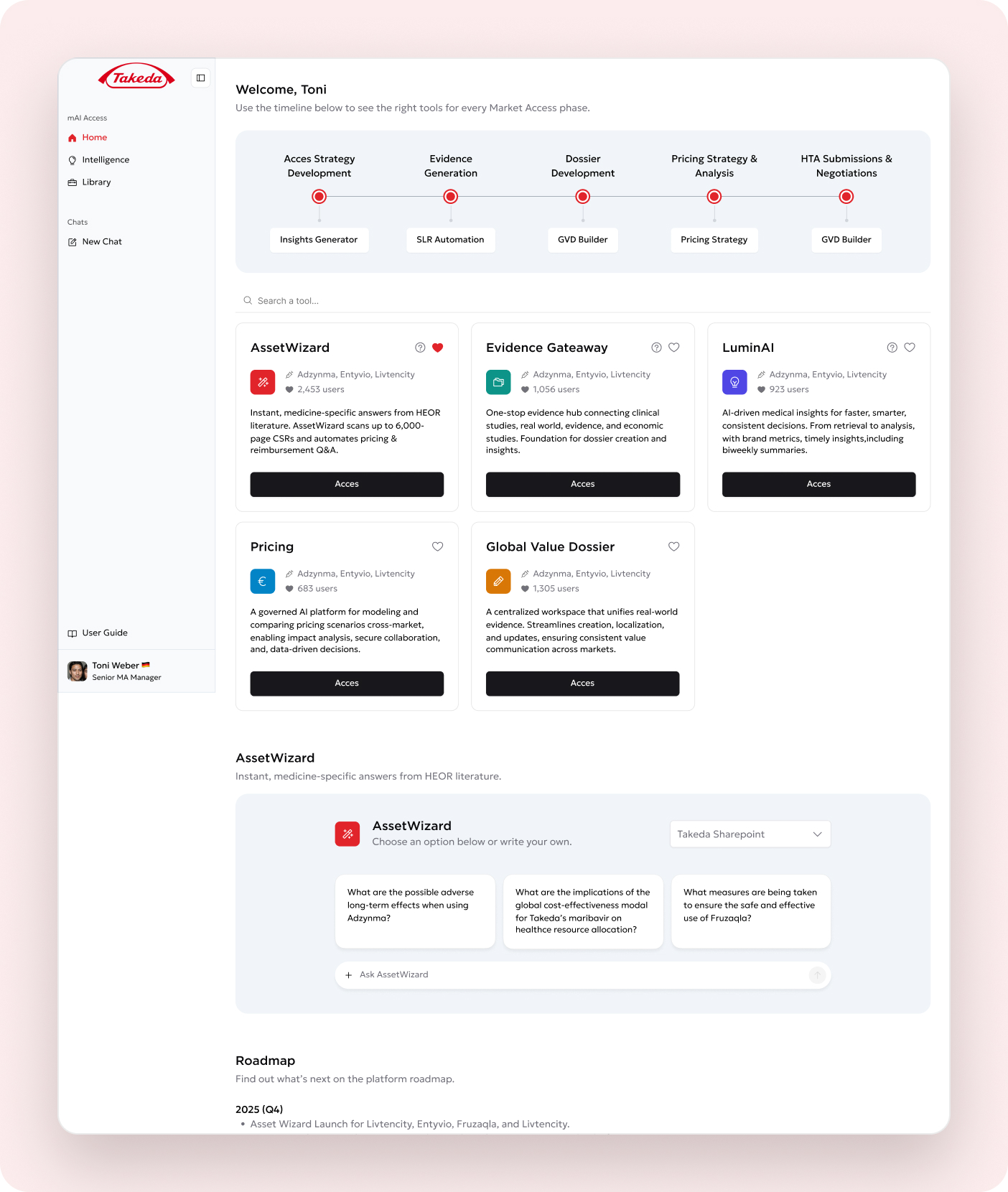
A market access timeline that maps every tool onto the stage where it helps

Extended Takeda’s Tailwind design library with the conversational components it lacked
Delivered in weekly sprints with weekly demos, perf budgets, security guardrails and telemetry

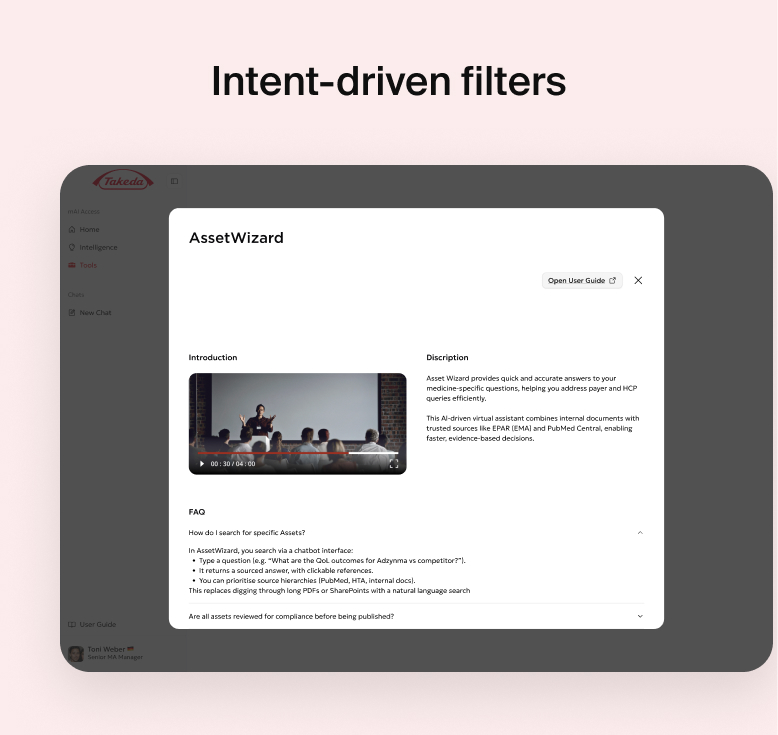
The Asset Wizard, embedded

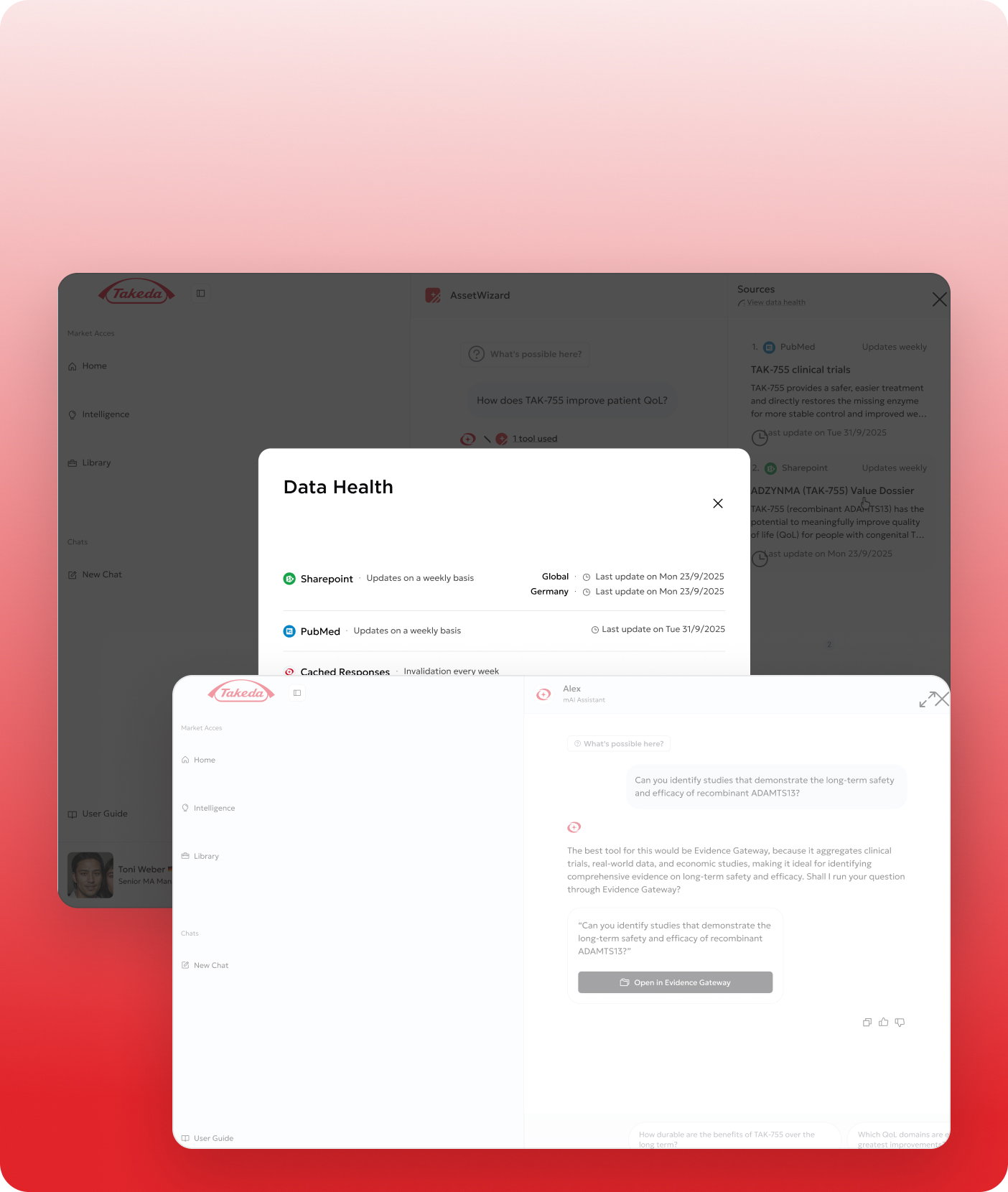
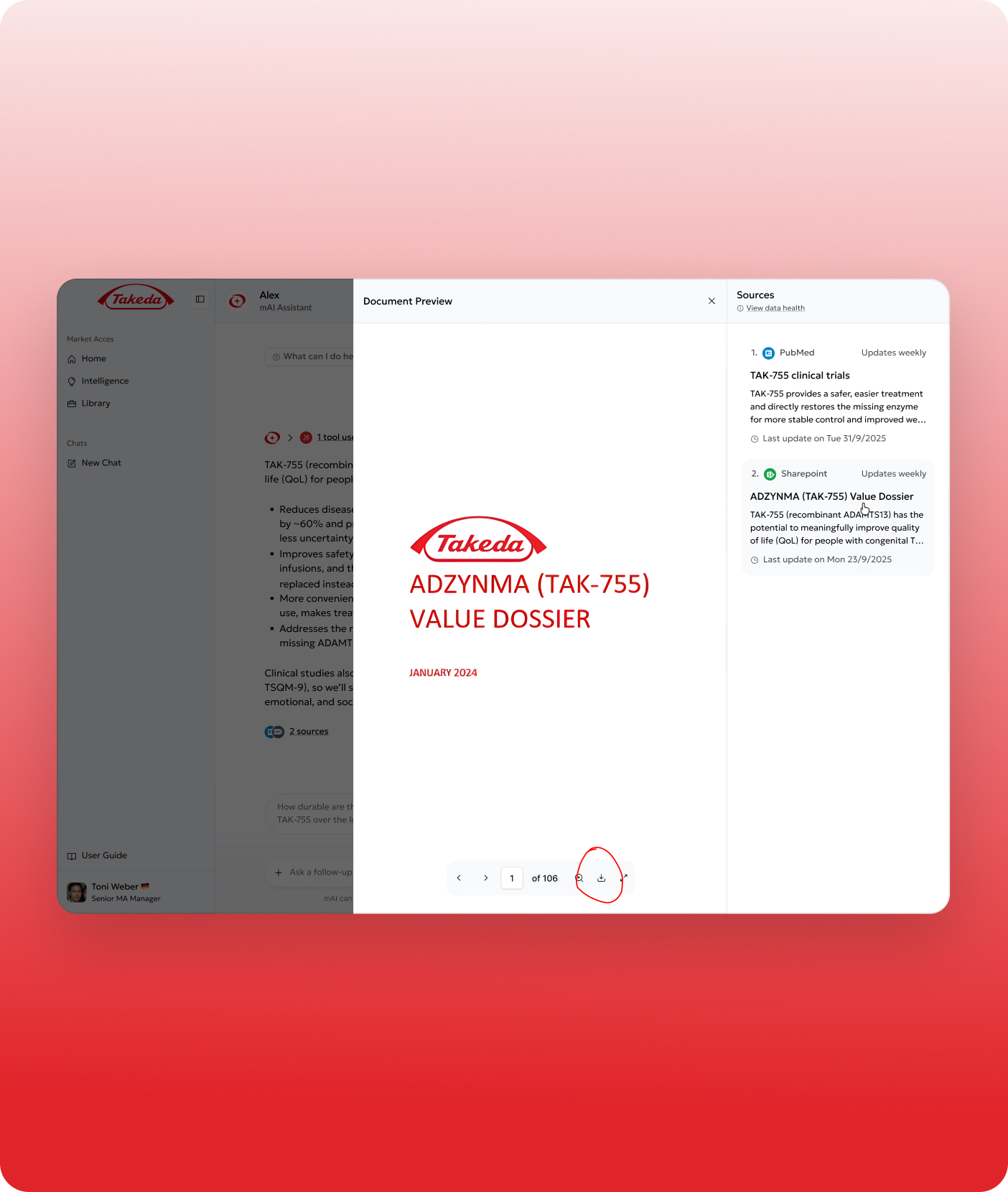
Conversational Q&A over PubMed, EMA and internal sources, native inside the platform
Every answer arrives structured:
Sources and confidence scores
Suggested follow-up questions
Side-by-side source documents
Source filters and data-health signals build trust in every answer

Backend-for-frontend layer

We shipped the first BFF building blocks: a secure document proxy and typed API contracts
And architected the full BFF, assistant orchestration and integration layer
One contract for the UI instead of a patchwork of team-owned endpoints
Capability teams plug in behind clear contracts, users see one product

Backend-for-frontend architecture

In AI products, the user experience is shaped as much by backend behaviour as by the interface. A slow agent loop, an inconsistent response format or conversation state in the wrong place breaks the experience, however good the screens look. So we treated the layer between the UI and Takeda’s AI capabilities as product work.

A React and TypeScript workspace talks to a UX-driven BFF in Node.js that shapes, aggregates and secures calls to multiple capability backends. An assistant orchestration layer holds intent and session context, routes tool calls and enforces guardrails on Takeda’s approved LangChain and LangGraph stack. Contract-first plug-ins connect Evidence Gateway, the Asset Wizard and Insights services on Takeda’s AWS and Databricks foundation.

The principle: capability teams build what the system can do; the experience layer decides how users experience it. Design sprints produce intent maps and API contracts first, so a multi-vendor programme still ships one product.
Outcomes

Delivering real value

A shorter road to reimbursement
Every week between approval and a reimbursed price is a week patients wait. Evidence that took an email hunt is one question away, and HTA landscapes, gap analyses and upside scenarios that took weeks of manual synthesis are generated in hours. Time-to-first-draft dossier drops, and Global and local teams align on strategy earlier in the launch.
Less reliance on external vendors
Literature reviews, HTA environment scans and dossier drafting were long outsourced: costly, slow, methodologically inconsistent and often outdated on arrival. Moving that work into in-house AI capabilities behind one experience layer lets Takeda keep the knowledge, control the method and cut recurring vendor spend, while its own analysts stay in charge of the judgement calls.

“[Client quote to be sourced and approved by Takeda]”

[Name], [Title] Takeda

Why own the experience layer?

You turn many AI agents into one product.
You let design sprints define the API contracts.
You keep UX behaviour where it is decided: the BFF.
You add capabilities without re-onboarding users.
You cut the hand-offs between vendors.
Next: an always-on mAI Assistant across every moduleMarket access colleagues reviewing an HTA report together
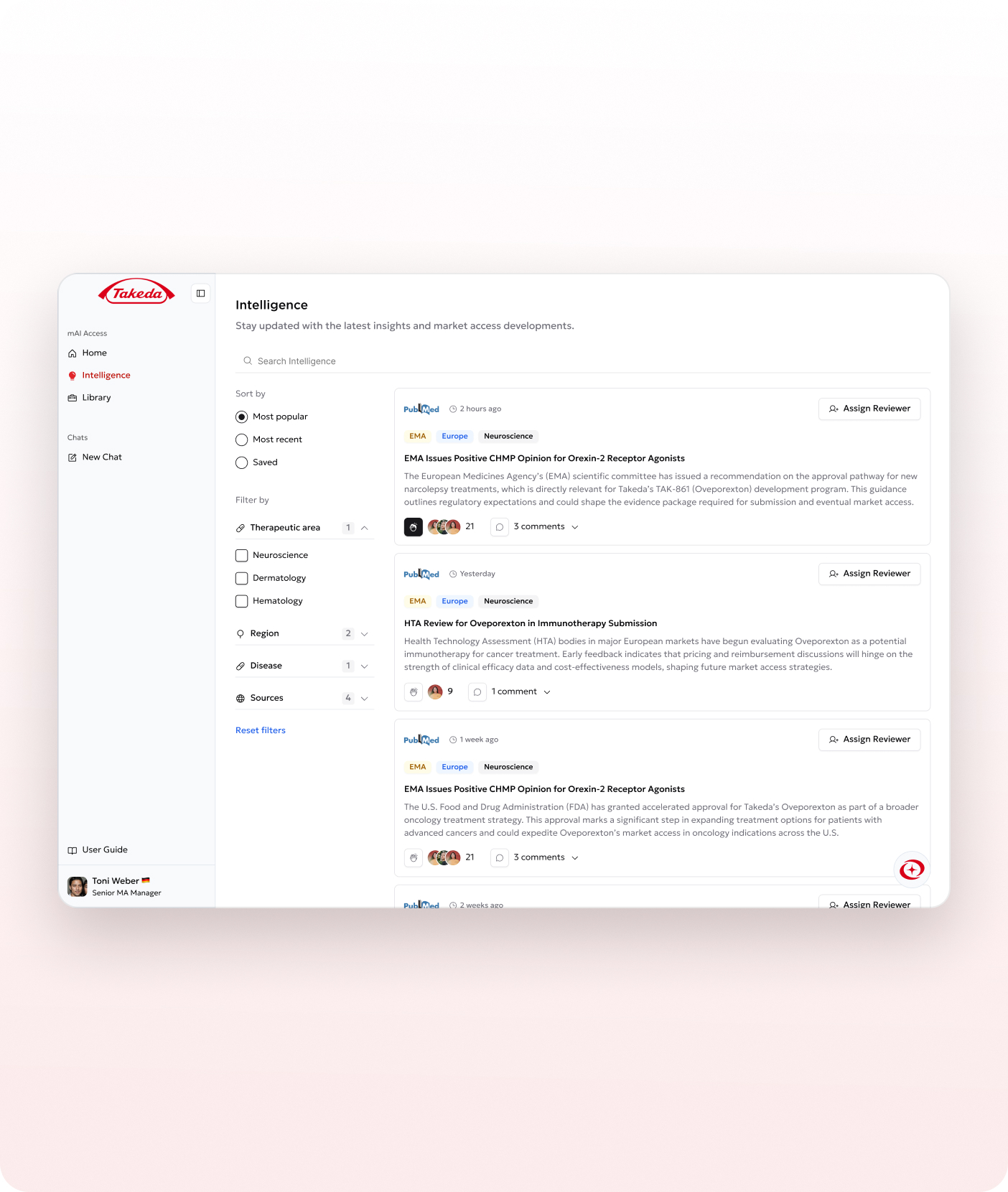
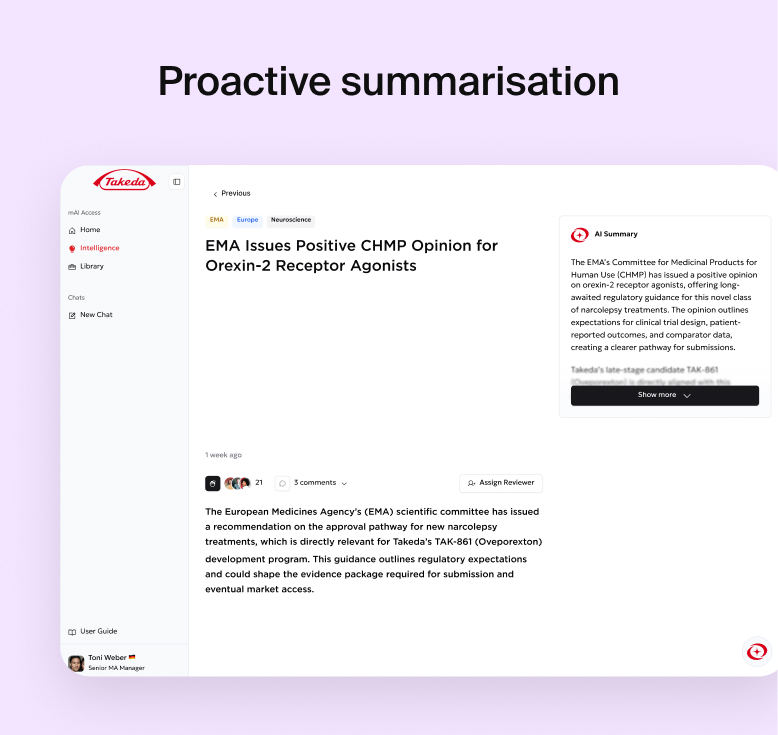
Proactive summarisation of EMA news in mAI AccessIntent-driven filters in the Asset Wizard
~400 market access users across Global, Regions and affiliatesOne front door for every mAI agent
Always-on mAI Assistant answering with sources
Market access timeline mapping tools to each phaseTeam planning market access scenarios at a whiteboard