
Putting expert advice at the heart of the store
Client


Helping a health retailer becomea trusted partner in everyday care
Medi-Market is a Belgian health and wellness group with ~120 outlets across Belgium and Luxembourg (pharmacies, parapharmacies, Institut by Medi-Market beauty centers), already active in Spain and Italy, with Dutch expansion underway. Their mission: democratize health expertise through expert advice, broad selection, and accessible prices. Retail, they've mastered. The harder challenge is the customer relationship.
Medi-Market wants to shift from selling health products to being part of how people manage their health in-store, at home, and online. Internally, this is Medi'Life: a single customer view that grows richer over time. Nimble came in as digital partner, starting with a discovery phase to shape the omnichannel health ecosystem and give the board an actionable recommendation, then a focused two-week sprint to pressure-test the first product's desirability and feasibility before building. The core question: how does a health retailer become a health partner without losing the human expertise that earns people's trust?
Medi-Market wants to shift from selling health products to being part of how people manage their health in-store, at home, and online. Internally, this is Medi'Life: a single customer view that grows richer over time. Nimble came in as digital partner, starting with a discovery phase to shape the omnichannel health ecosystem and give the board an actionable recommendation, then a focused two-week sprint to pressure-test the first product's desirability and feasibility before building. The core question: how does a health retailer become a health partner without losing the human expertise that earns people's trust?
opportunity
Medi-Market's perspective
The ambition is one customer relationship across every channel, anchored in a profile that maps needs to products and gets smarter over time.
That profile barely exists today. What advisors learn in-store disappears at the till, making the store the right place to start.
Many advisors are not formally trained in pharma, beauty, or nutrition. Their tools support operations, not trusted advice.
Health data brings consent and compliance constraints, while key systems are still maturing. The approach had to work with that reality.
The industry's perspective
Belgian health and wellness retail is crowded. The room to win is expertise, personalization, and connected service.
Growth sits with younger, digital-first families who spend more on wellness but stay loyal to no one.
Customers arrive with Yuka or ChatGPT-level expectations. In health, generic, unsourced AI does not earn trust.
Holland & Barrett's H&B&Me shows the pattern: a short questionnaire, store-led start, at-home continuation, and trained staff.
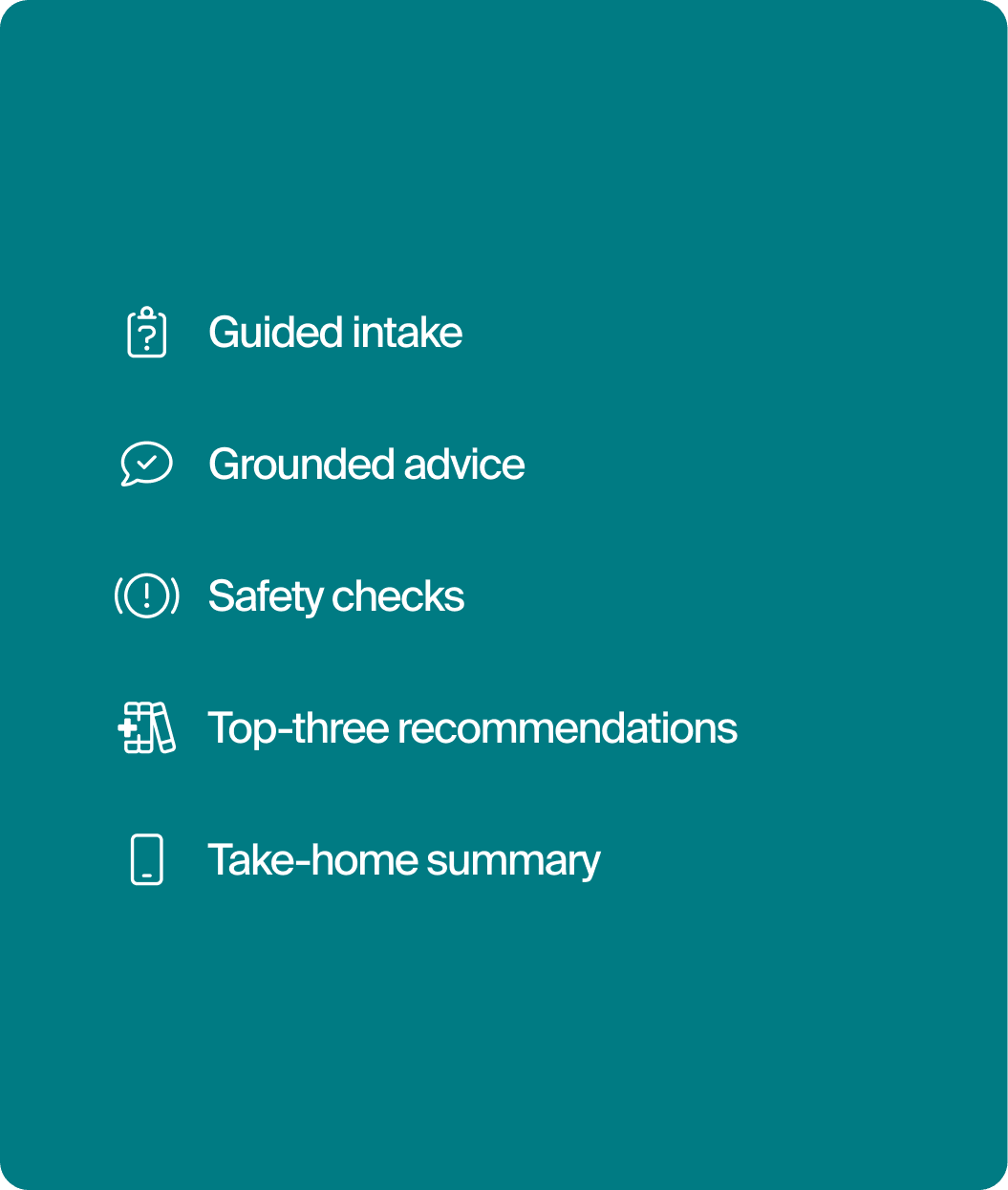
What the concept covers
An AI advisor that makes the person at the counter better, not redundant
1. Guided intake
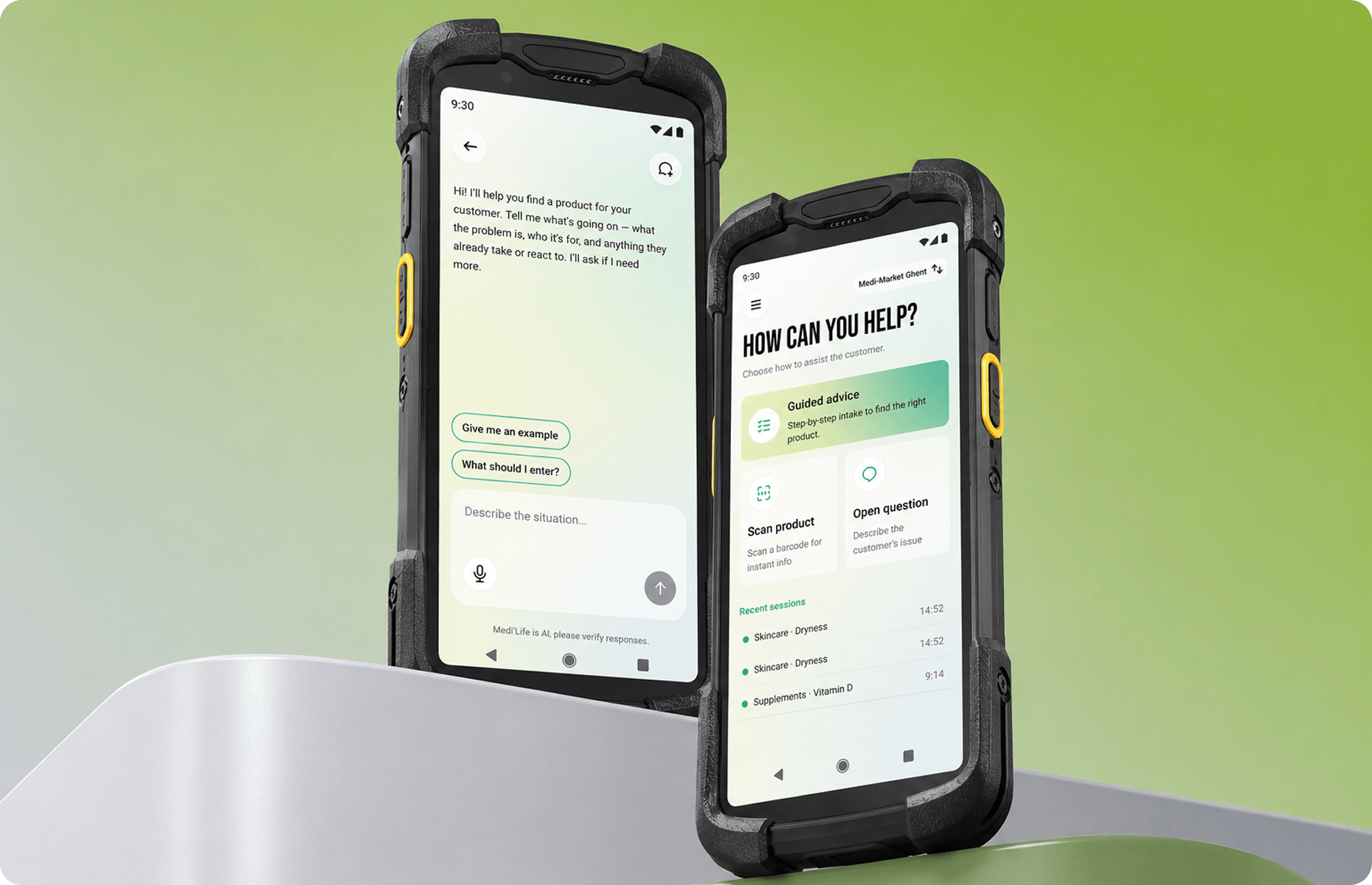
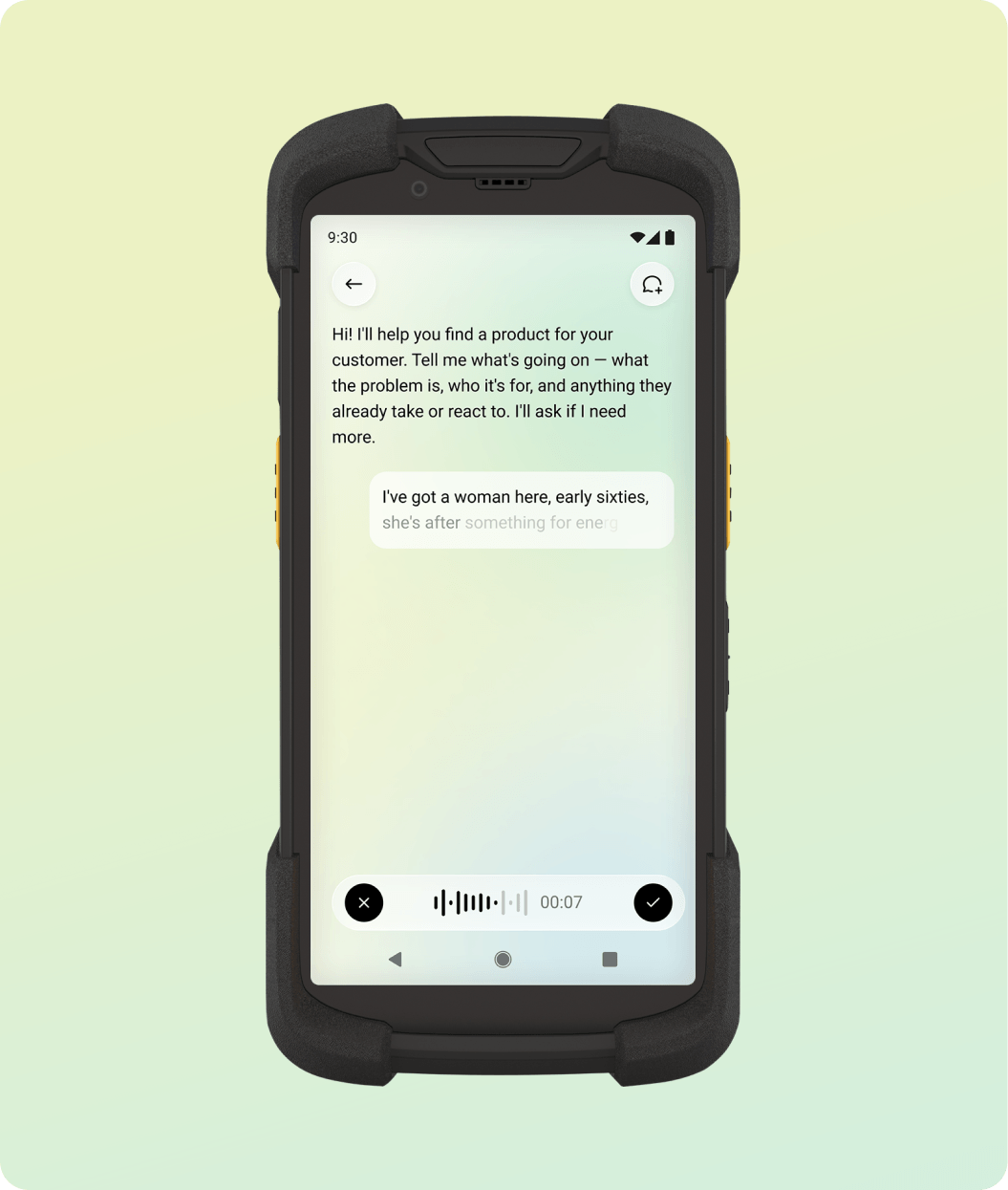
The experience starts with a real conversation: what kind of night is it, what's on your mind, what do you need? No forms. No generic prompts.
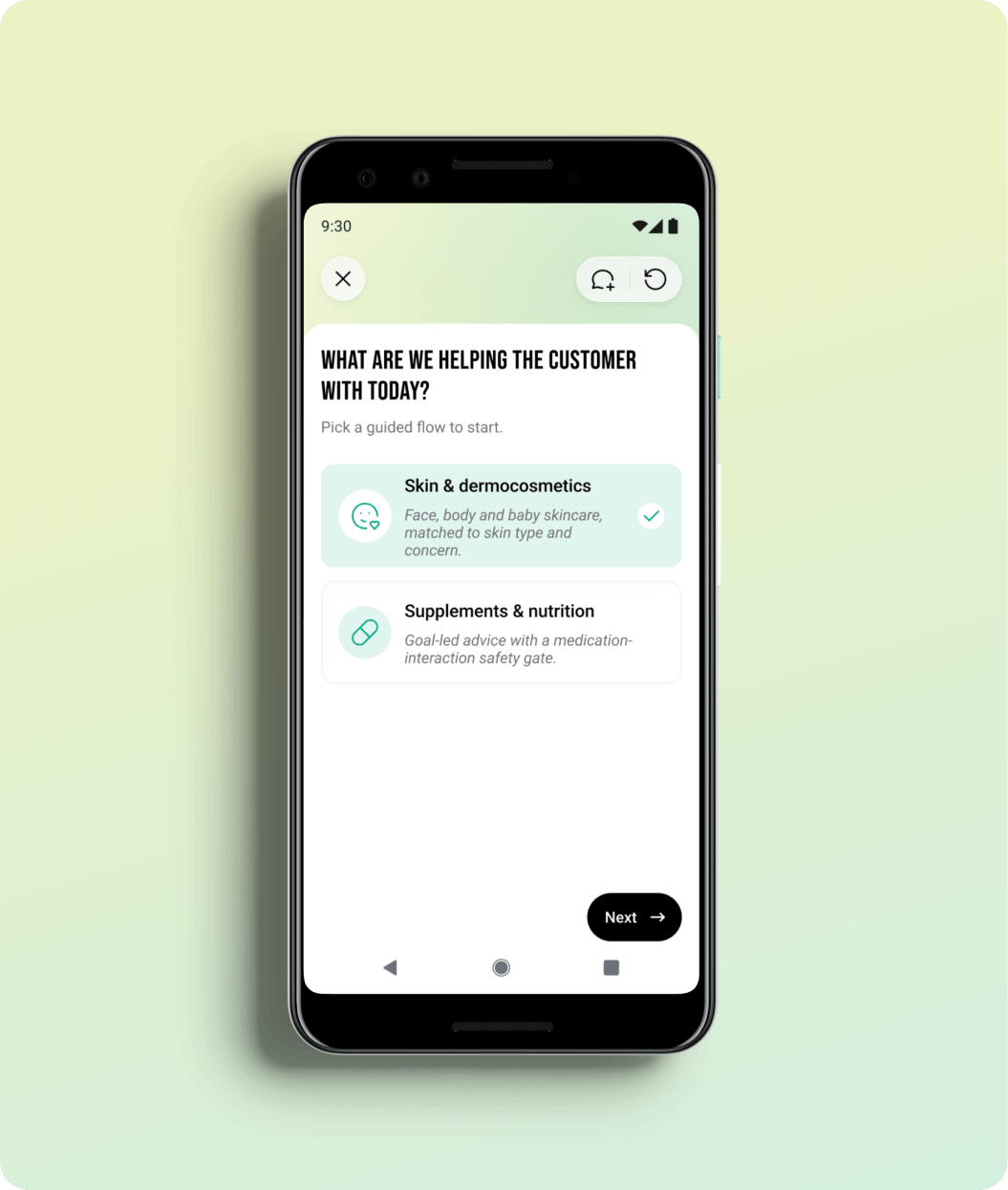
2. Grounded advice
An engine based on leaflets and expert-curated sources, with guardrails and careful language ("can help with" not "will cure").
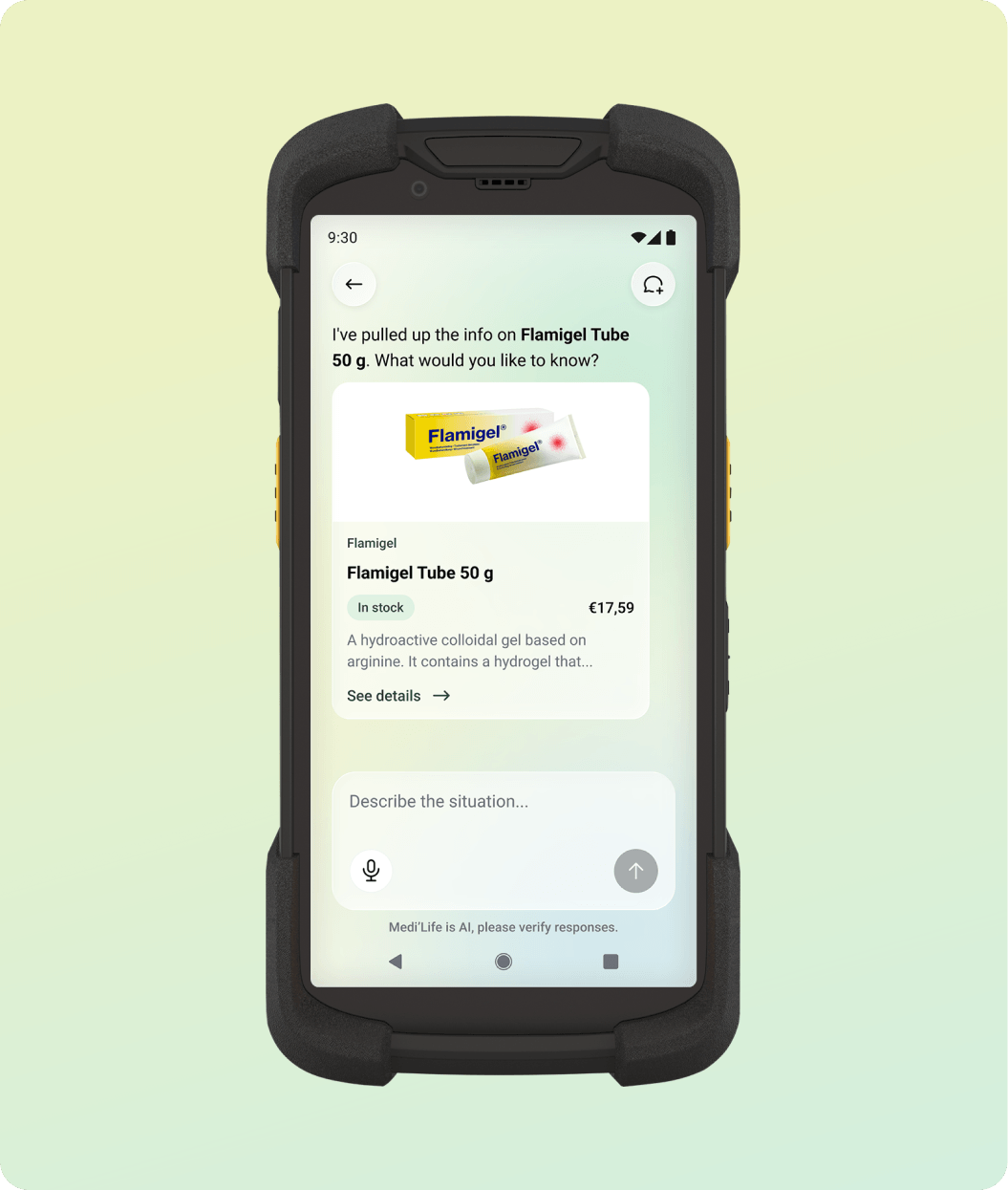
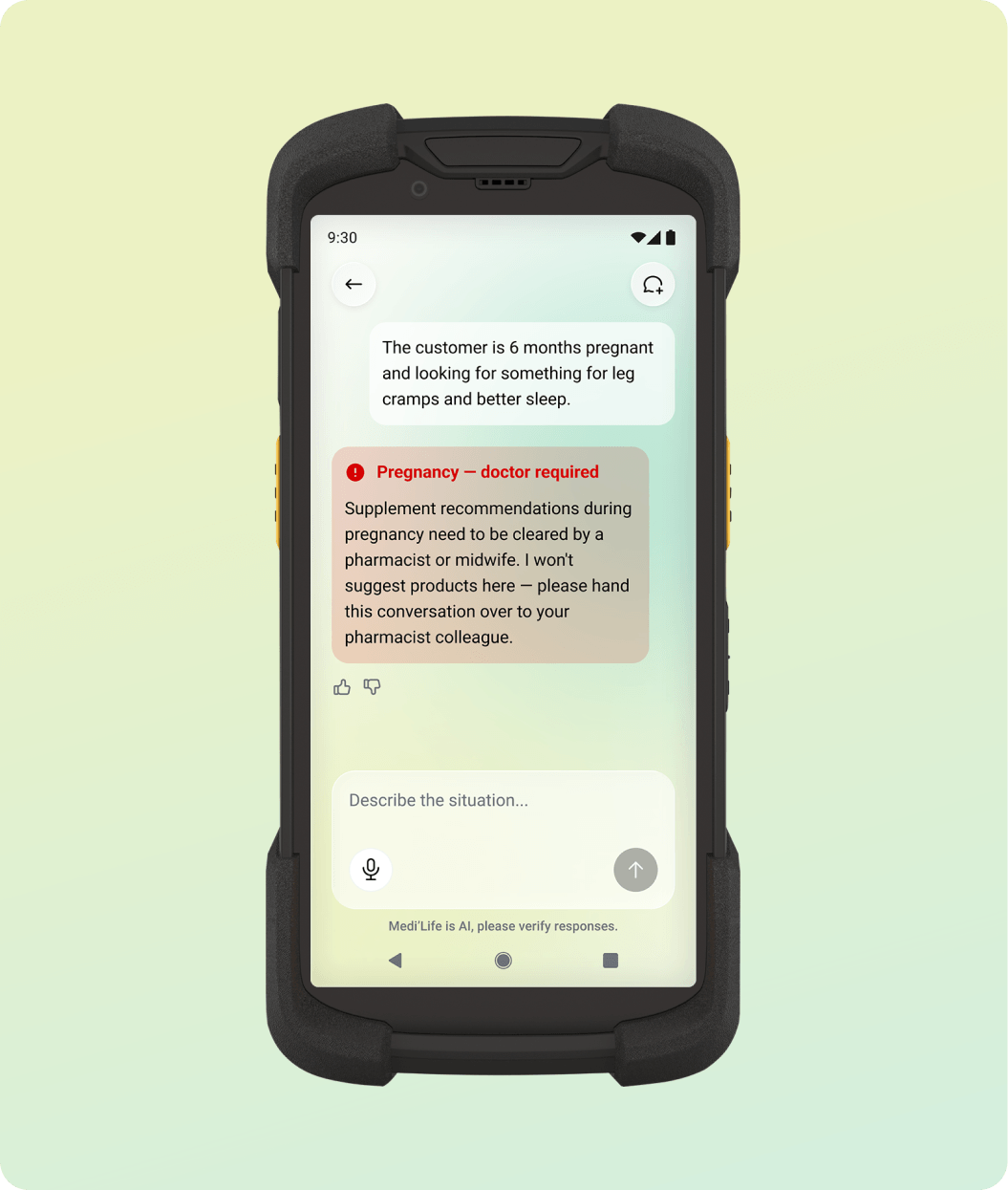
3. Safety checks
Allergen avoidance, substitutions, and interaction flags, with a stop-and-refer-to-pharmacist path when needed.
4. Top-three recommendations
Product options narrowed down so the customer is not drowned in choice.
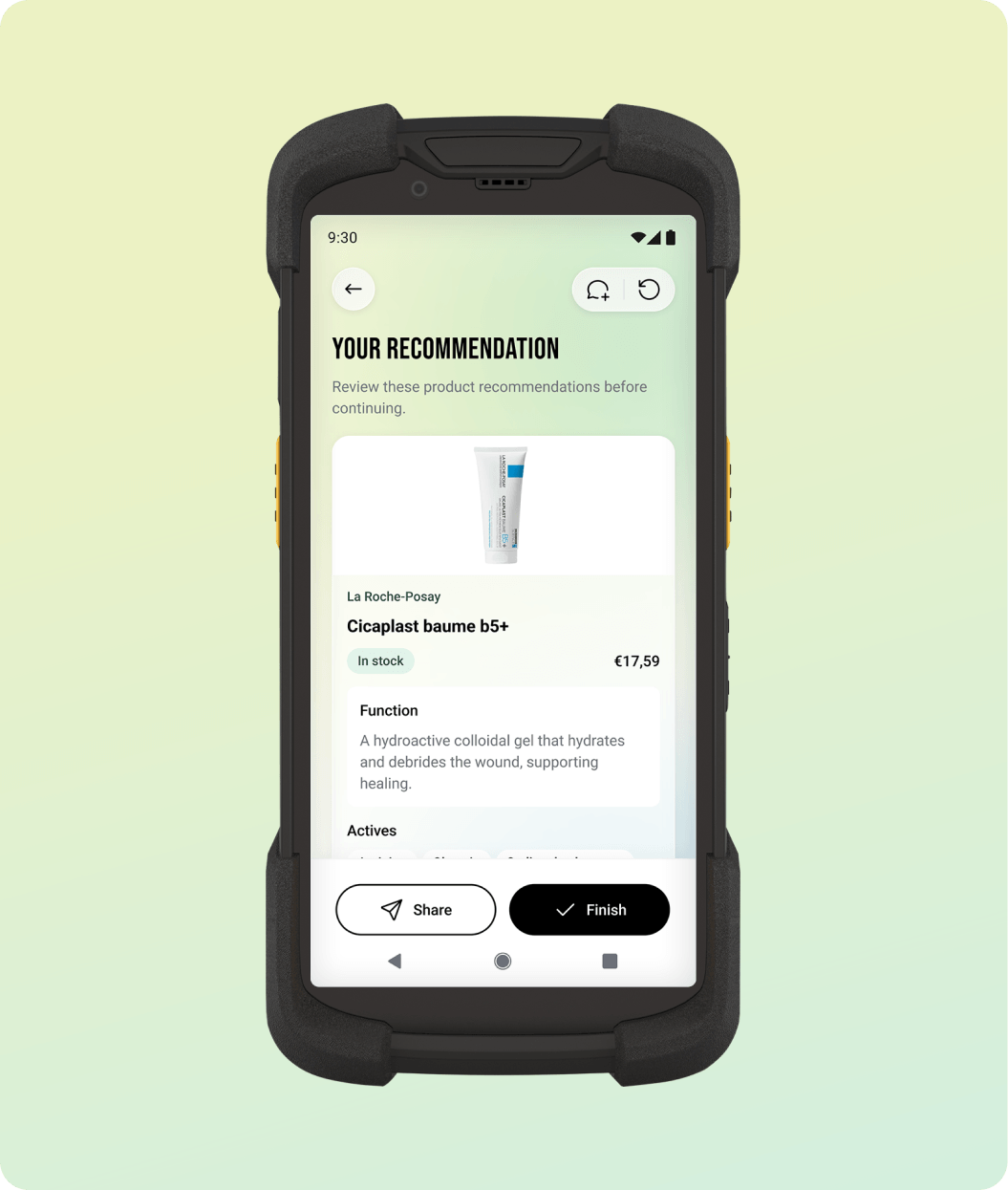
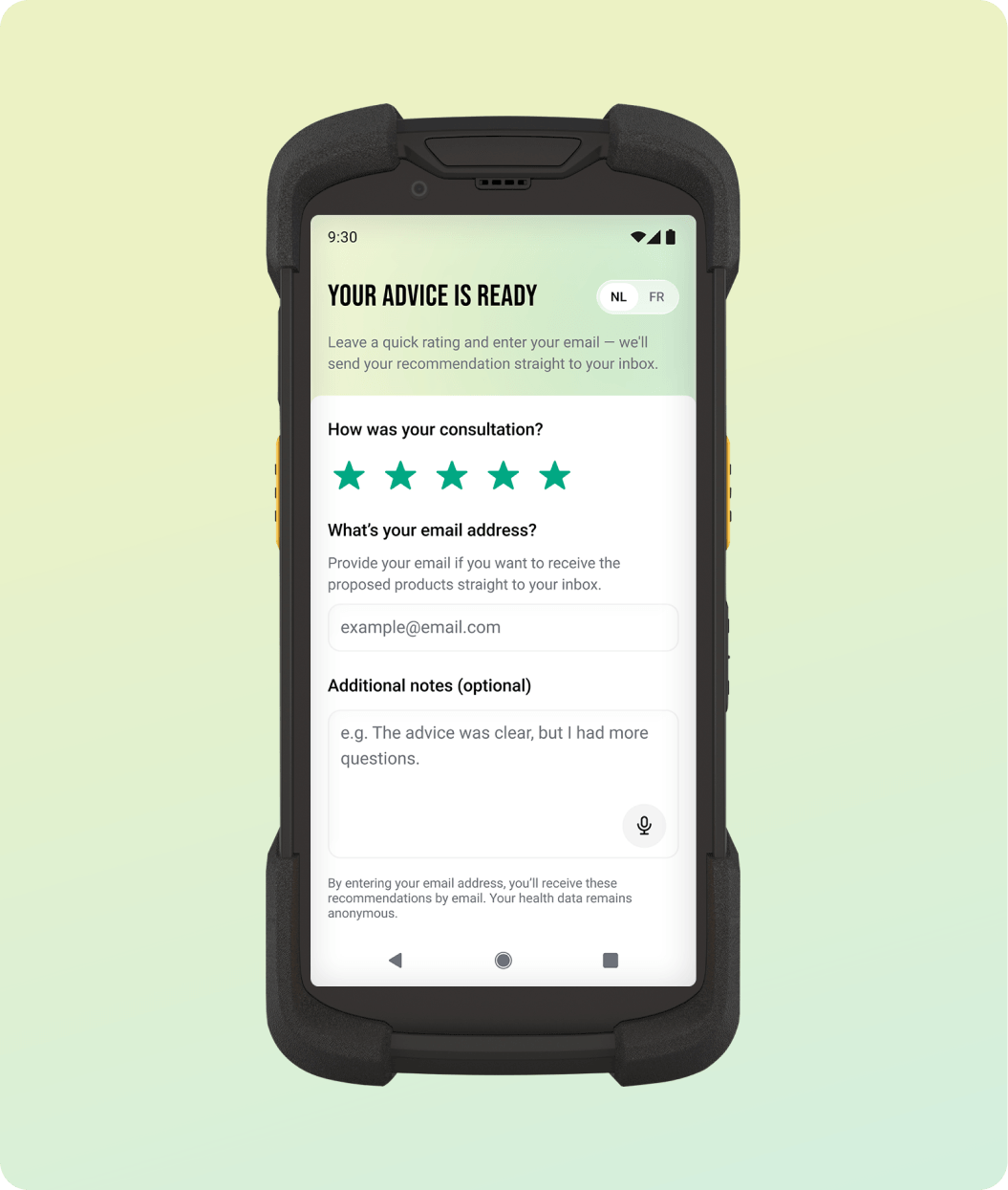
5. Take-home summary
An optional consultation recap the customer can receive by QR code or email.
shipped to learn
Start with the advisor
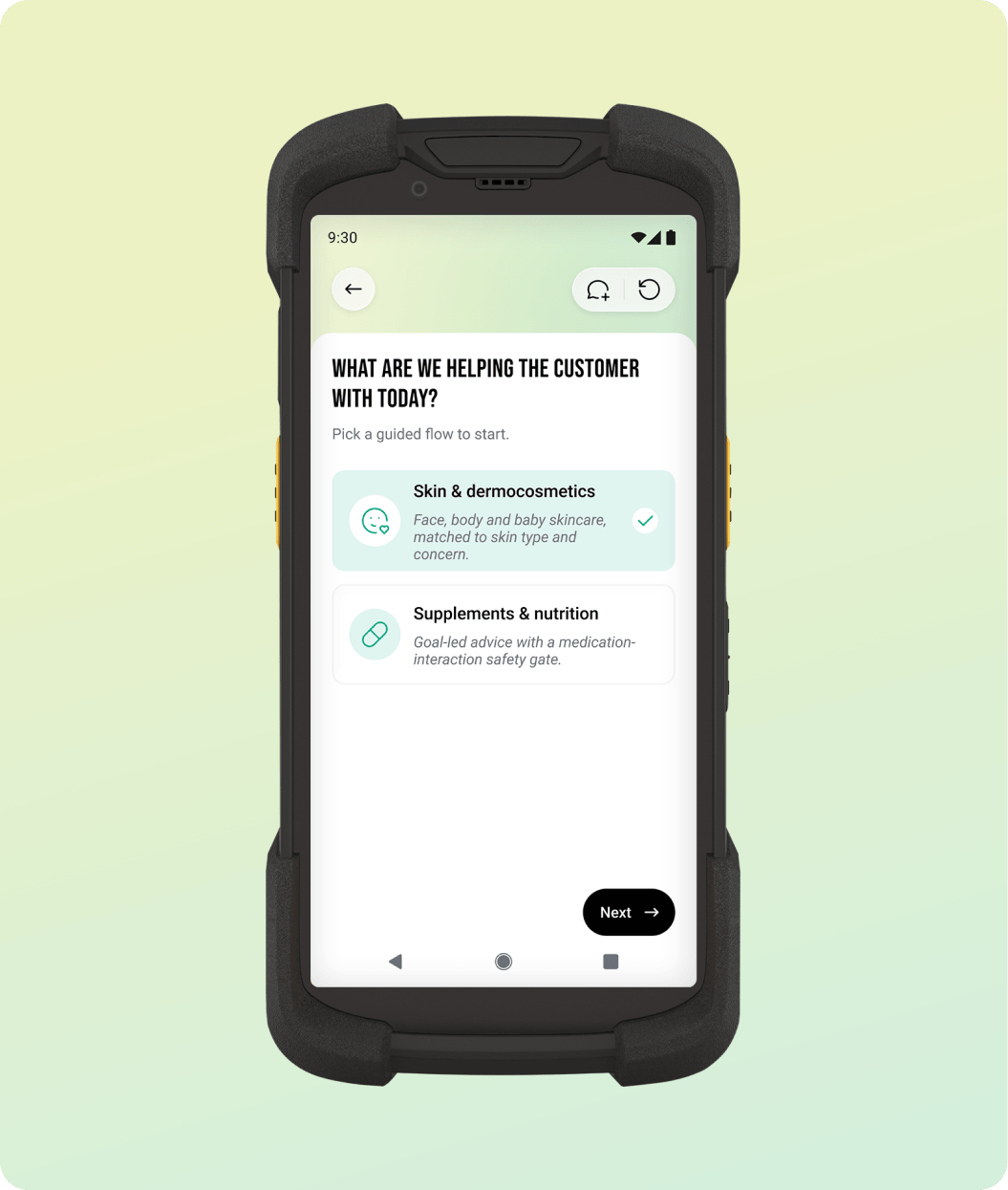
The discovery work set clear boundaries. The scope rule is to fix the concern and let the solution float: lock a small set of entry concerns and, for each, let the assistant reach across categories (skincare, supplements, nutrition, lifestyle, or a referral out) rather than try to solve the whole of health at once.
The advice has to cross the boundaries the store's aisles draw, since a skincare product does little for someone whose real issue is sleep or diet. The assistant is advisor-only for now, not consumer-facing, and it advises rather than diagnoses or sells. A smaller assistant that genuinely helps is worth more than a broad one that disappoints.
.png)
The THINKING
What the discovery track taught us
1. The human is the moat.
Against players who compete on price and speed, the trusted advisor is the thing a pure player cannot copy. So the assistant's job is to make that advisor better, not to replace them. Putting it in staff hands first also means experts catch unsafe or wrong advice before any customer ever sees it. It is a safer place to prove an AI health advisor than pointing it straight at the public.
2. Trust comes from the source, not the model.
The strongest, most repeated signal from the floor was that staff and customers do not trust generic AI that cannot show its work, especially when a customer is already holding Yuka. Every answer has to carry its source, and the language has to stay on the right side of a clear well-being-versus-clinical line. In a health setting, sourcing is not a nice-to-have; it is the product.
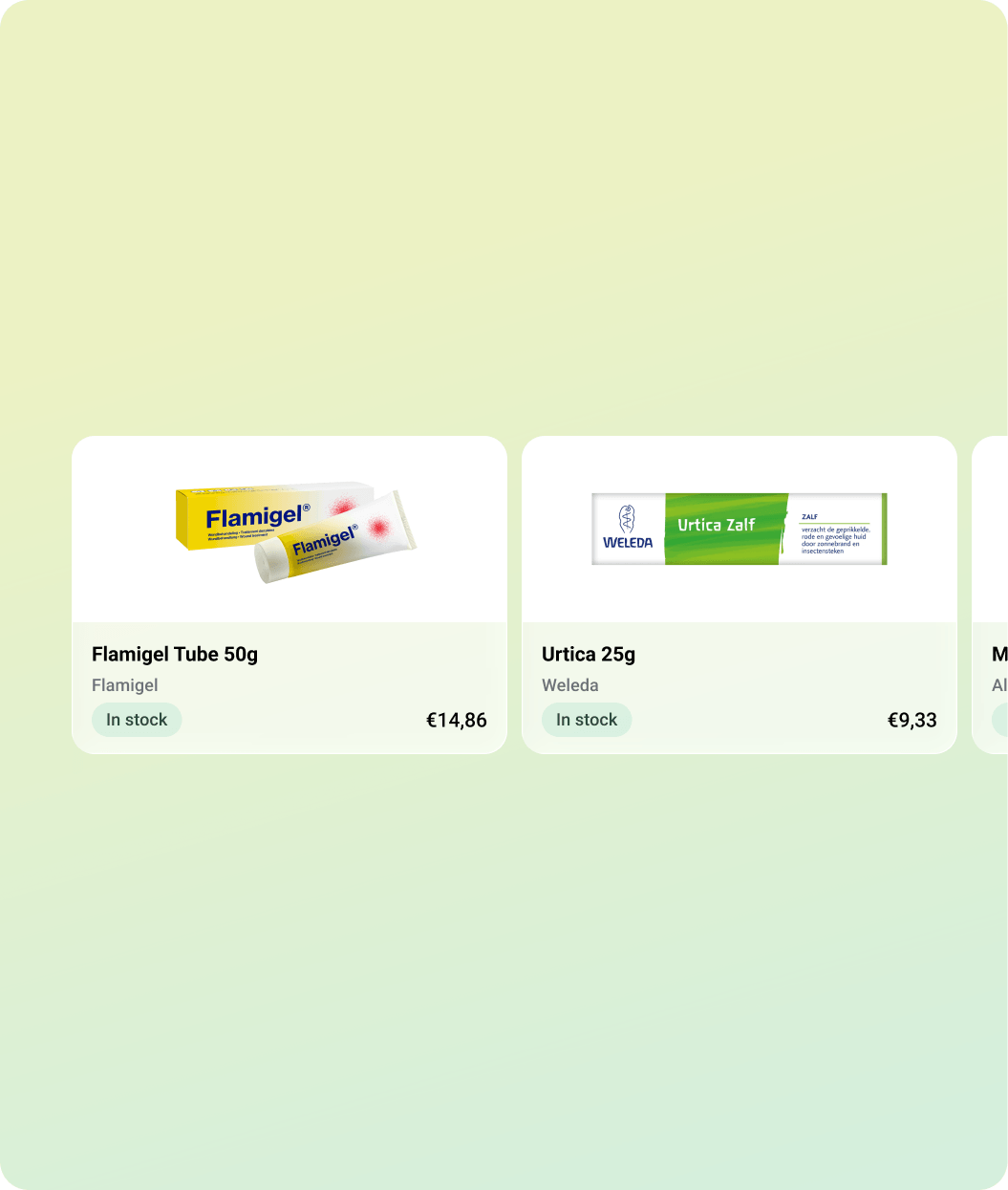
3. The profile is the product, not the catalogue.
Almost everything Medi-Market learns about a customer in a store evaporates at the till today. The real build is one customer identity that maps needs to products and gets smarter with every interaction. That is the Sephora Beauty Insider model, applied to health instead of beauty.
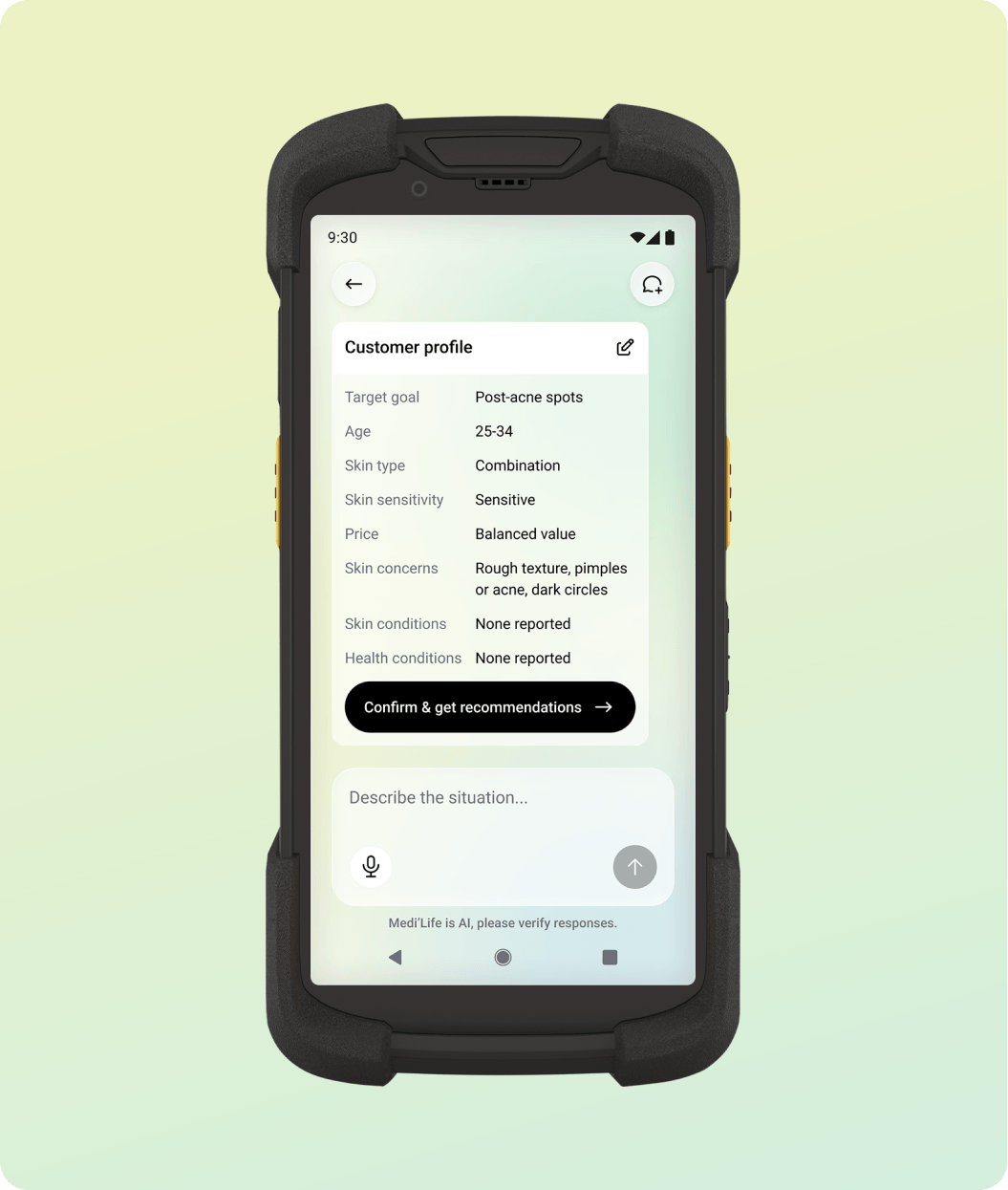
4. Meet staff where they already are.
The validated experience was not a shiny new app but a light assistant inside the device and the seconds advisors actually have, with a short open question first and guided options when it gets busy. Voice as a live consult input failed in the field. Integration beats novelty in an operational environment.
.png)
5. Fix the concern, let the solution float.
The discipline that keeps the work honest is choosing a handful of concerns to support well, then letting the assistant cross categories to answer them. It is the difference between a focused tool people trust and a system that tries to do everything and advises on nothing. It also gives the business a concrete content brief instead of "cover all of health".
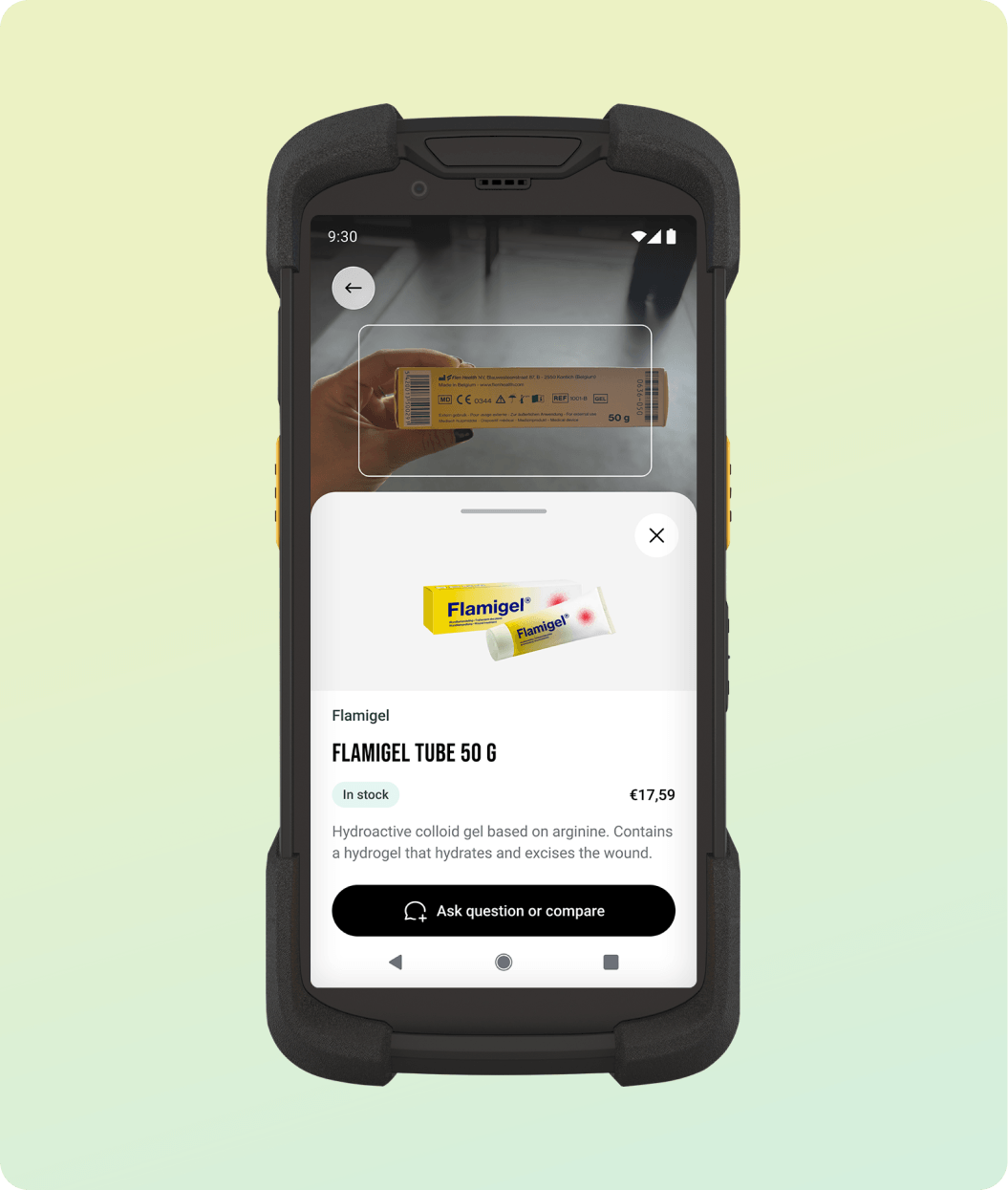
6. Start where it's safe and do not wait for the data cleanup.
Rather than block on systems and a data migration outside the project's control, the assistant starts session-based and identity-optional, with intent held in its own layer. It delivers value quickly and doubles as the foundation for everything that comes after. The store is the first room; the same backend can later power kiosks, the app, and a consumer-facing assistant. Build once, deploy everywhere.
sneak peek
What's next?
Medi'Life is in active build now, on a ten-week cycle, running on the devices already in stores, with advisors as the first users. That is the starting point, not the destination.
The ambition is bigger than a smarter counter. It is one continuous customer relationship that follows the person across every touchpoint: the store, the app, e-commerce, kiosks, and the home, each one drawing on the same profile and underpinned by AI. The advisor opening a session is simply the first thread. Over time the same intelligence powers a consumer-facing assistant, personalized follow-ups, and a journey that feels like a single relationship rather than a series of disconnected visits. That is the Medi'Life ecosystem Nimble and Medi-Market are building toward, with compliance for health and transactional data maturing alongside it. Medi'Life is the first, deliberately scoped piece of a much larger system.
The ambition is bigger than a smarter counter. It is one continuous customer relationship that follows the person across every touchpoint: the store, the app, e-commerce, kiosks, and the home, each one drawing on the same profile and underpinned by AI. The advisor opening a session is simply the first thread. Over time the same intelligence powers a consumer-facing assistant, personalized follow-ups, and a journey that feels like a single relationship rather than a series of disconnected visits. That is the Medi'Life ecosystem Nimble and Medi-Market are building toward, with compliance for health and transactional data maturing alongside it. Medi'Life is the first, deliberately scoped piece of a much larger system.