
AG Insurance - Putting employees first
Client

Making employee benefits feel like they belong to you.
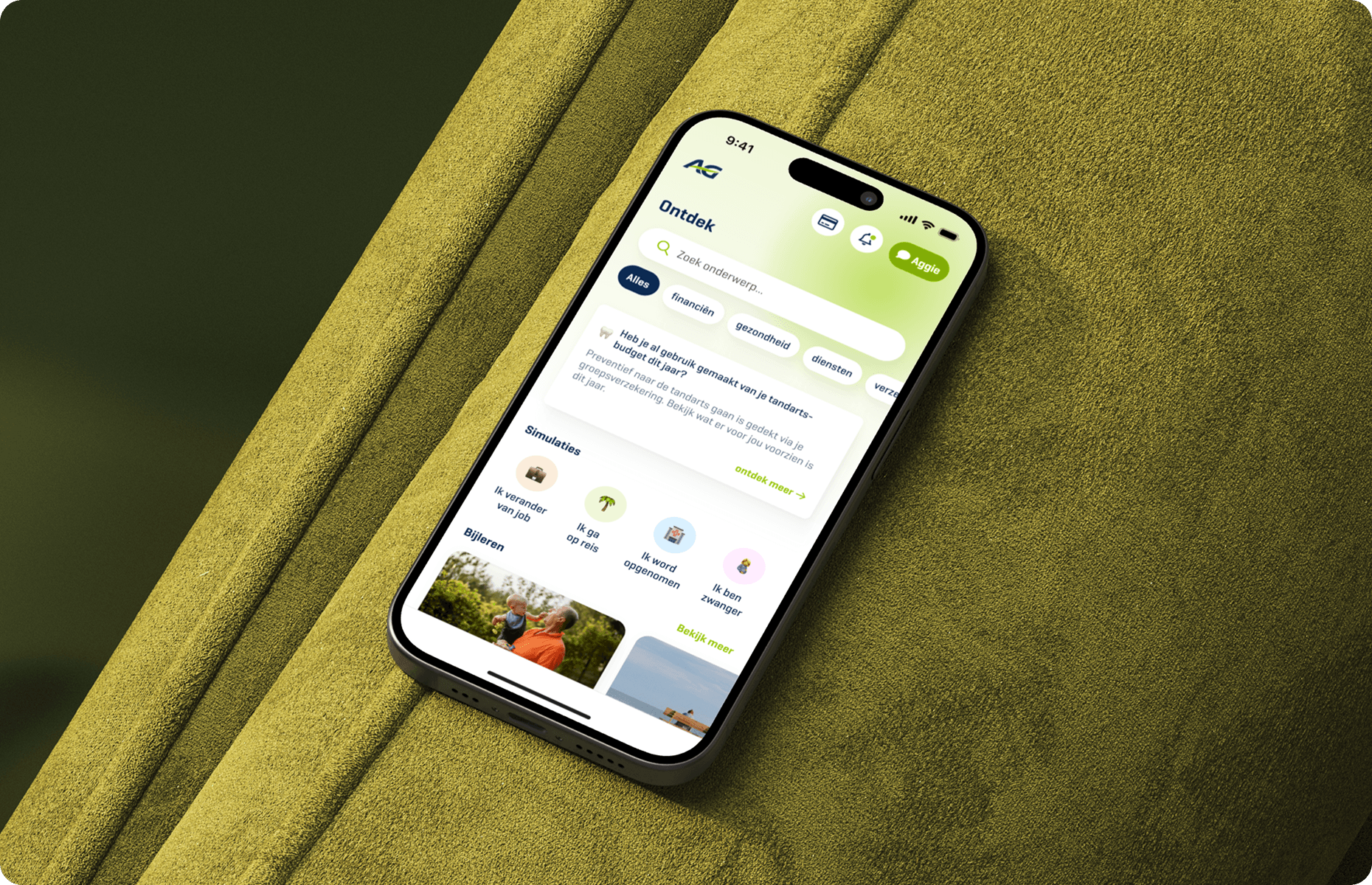
AG Insurance looks after more than 500,000 insured employees across Belgium through MyAG EB, its employee benefits app. It covers four domains: healthcare, pension, disability, and death cover. The app already does its core job well: people log in, submit claims, and find their documents. The opportunity was to make it do much more for the people using it day to day.
When AG asked us to shape the next evolution of the app, we started with a question rather than a feature list: who is this app really for? Over a focused discovery track, we spoke with fourteen people inside AG and five of its corporate customers, ran a desirability, feasibility, and viability workshop, and tested our thinking with real users. The answer gave the whole project a clearer center of gravity, and most of the design decisions followed from it.
When AG asked us to shape the next evolution of the app, we started with a question rather than a feature list: who is this app really for? Over a focused discovery track, we spoke with fourteen people inside AG and five of its corporate customers, ran a desirability, feasibility, and viability workshop, and tested our thinking with real users. The answer gave the whole project a clearer center of gravity, and most of the design decisions followed from it.
opportunity
AG Insurance's perspective
MyAG EB was built to showcase employer benefits; next it should better support employees managing health and pension.
The app balances employer communication, employee self-service, and operational efficiency.
Signals showed room to improve: NPS around 15, limited pension engagement, and low services usage.
Healthcare drives daily use, while pension carries the most long-term value.
Backend capacity is largely committed for the next 12–18 months, so near-term improvements should be frontend-first.
The industry's perspective
Employee benefits are document-heavy and poor at answering employee questions, even though transactions work well.
New single-domain players are unbundling the experience while incumbents keep the contracts.
Most EB deals still go through brokers, but incumbency weakens when employee-facing products are stronger elsewhere.
The “one insurer, all benefits, one app” promise is a strong employer argument, but less proven for employees, creating opportunity.
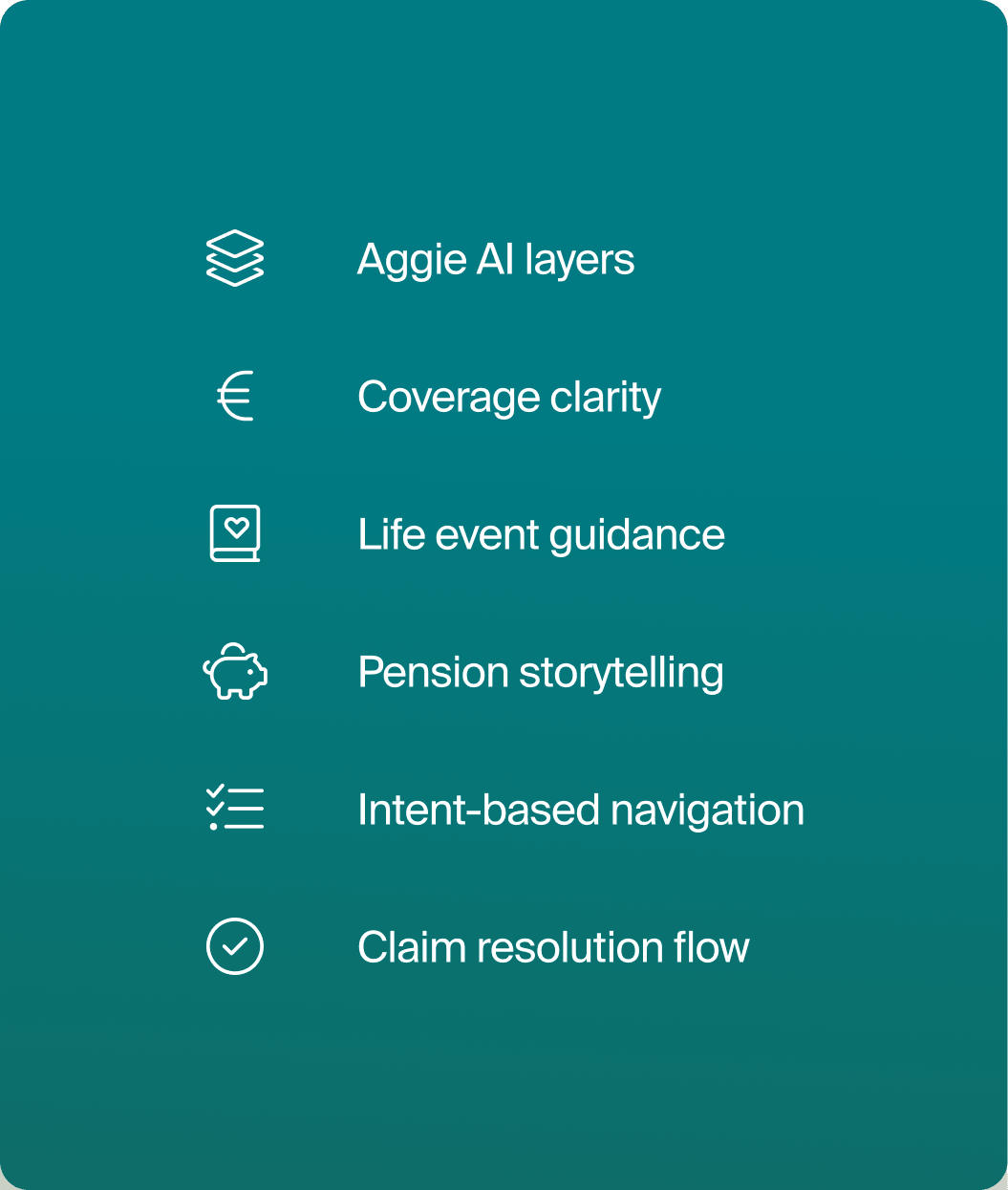
What the concept covers
Rebuilding the app around the employee's questions and life moments
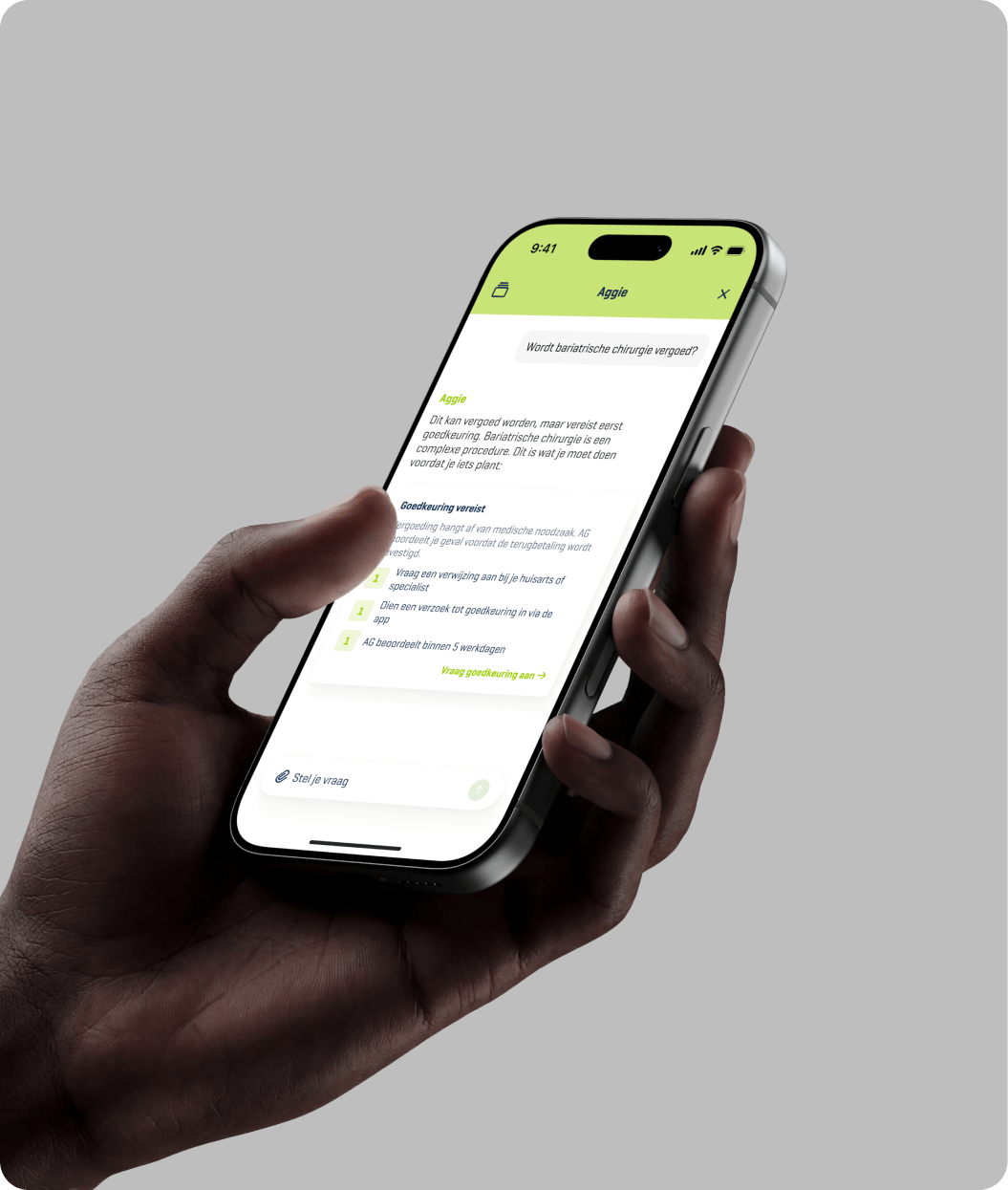
Aggie AI layer
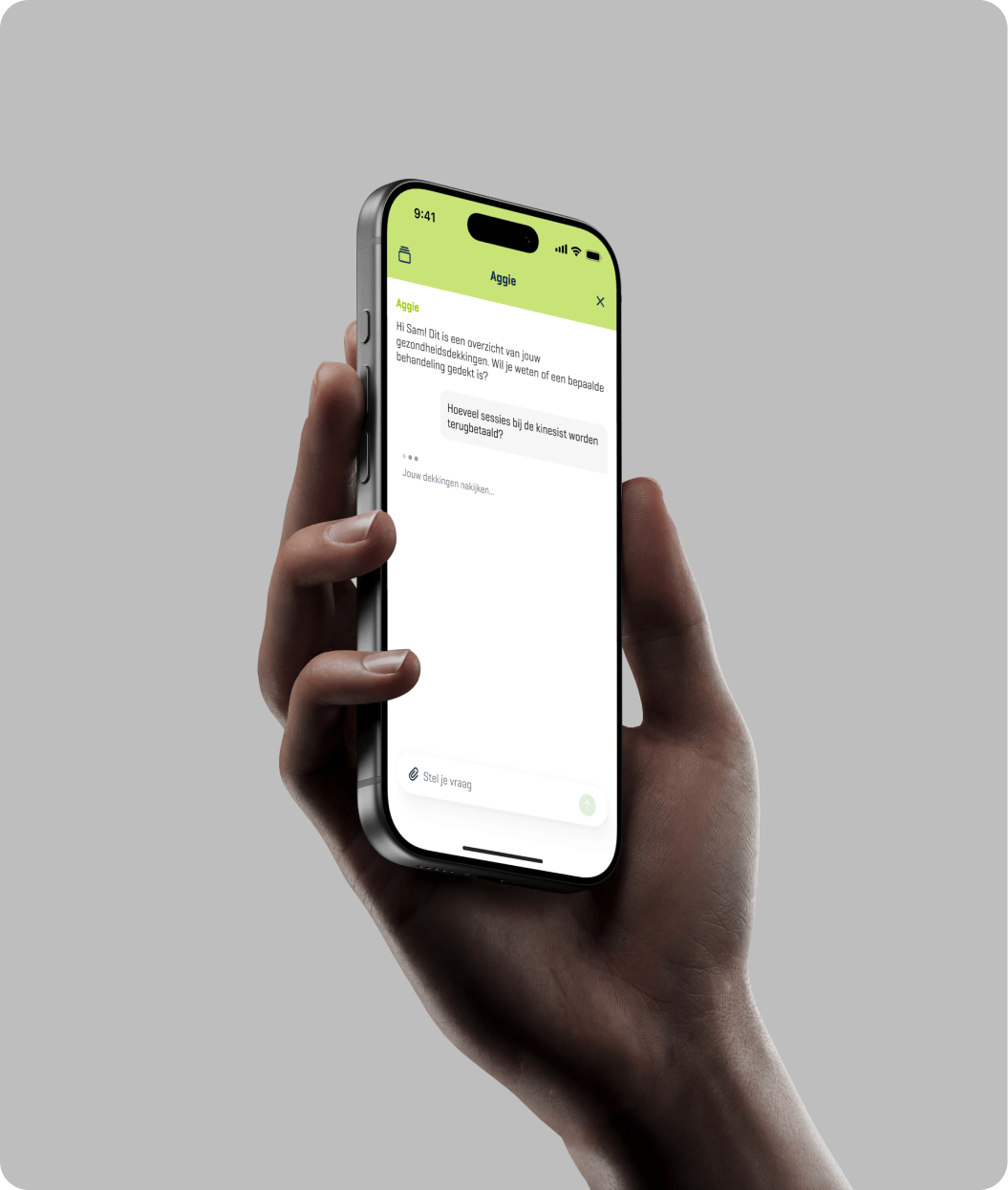
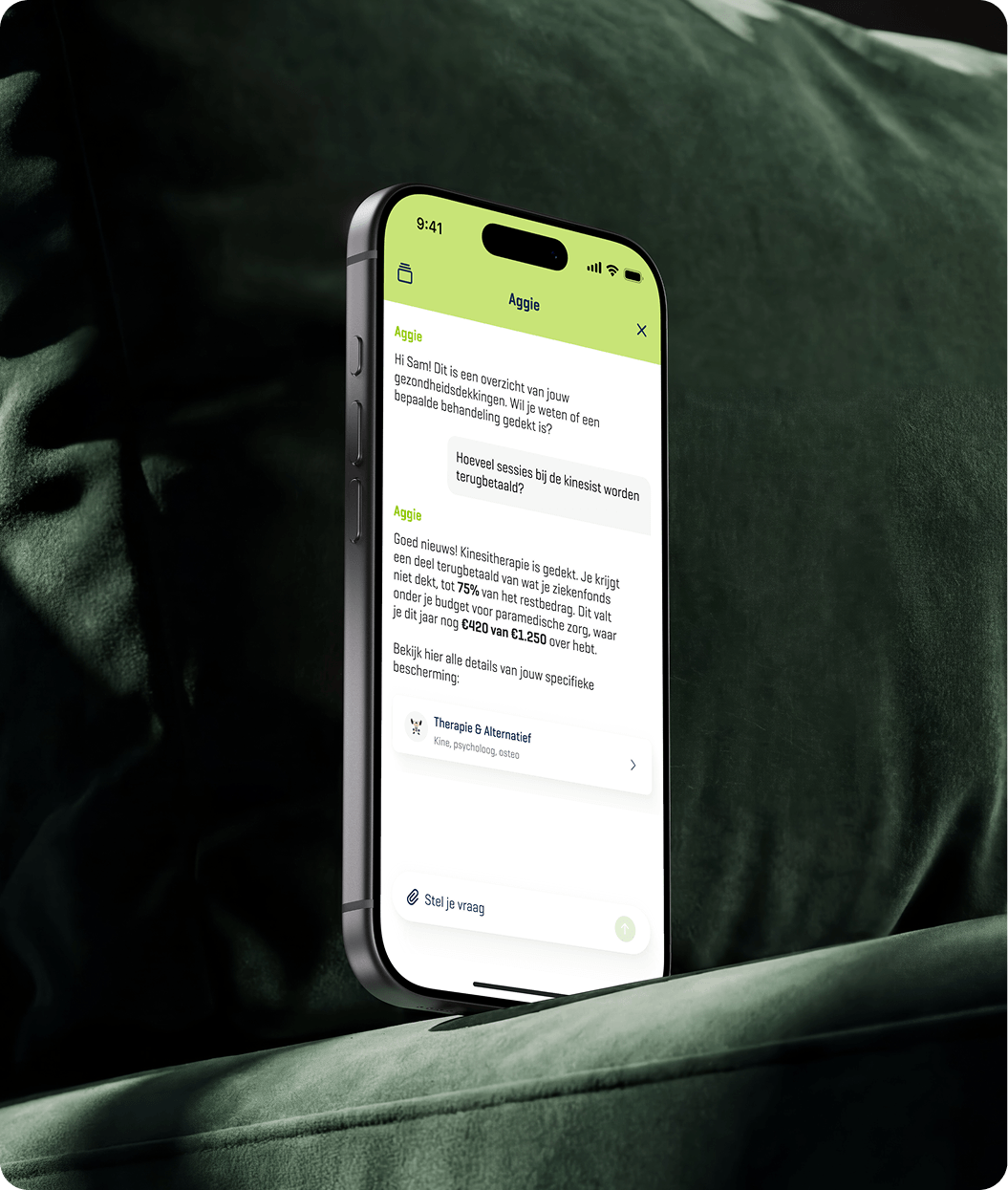
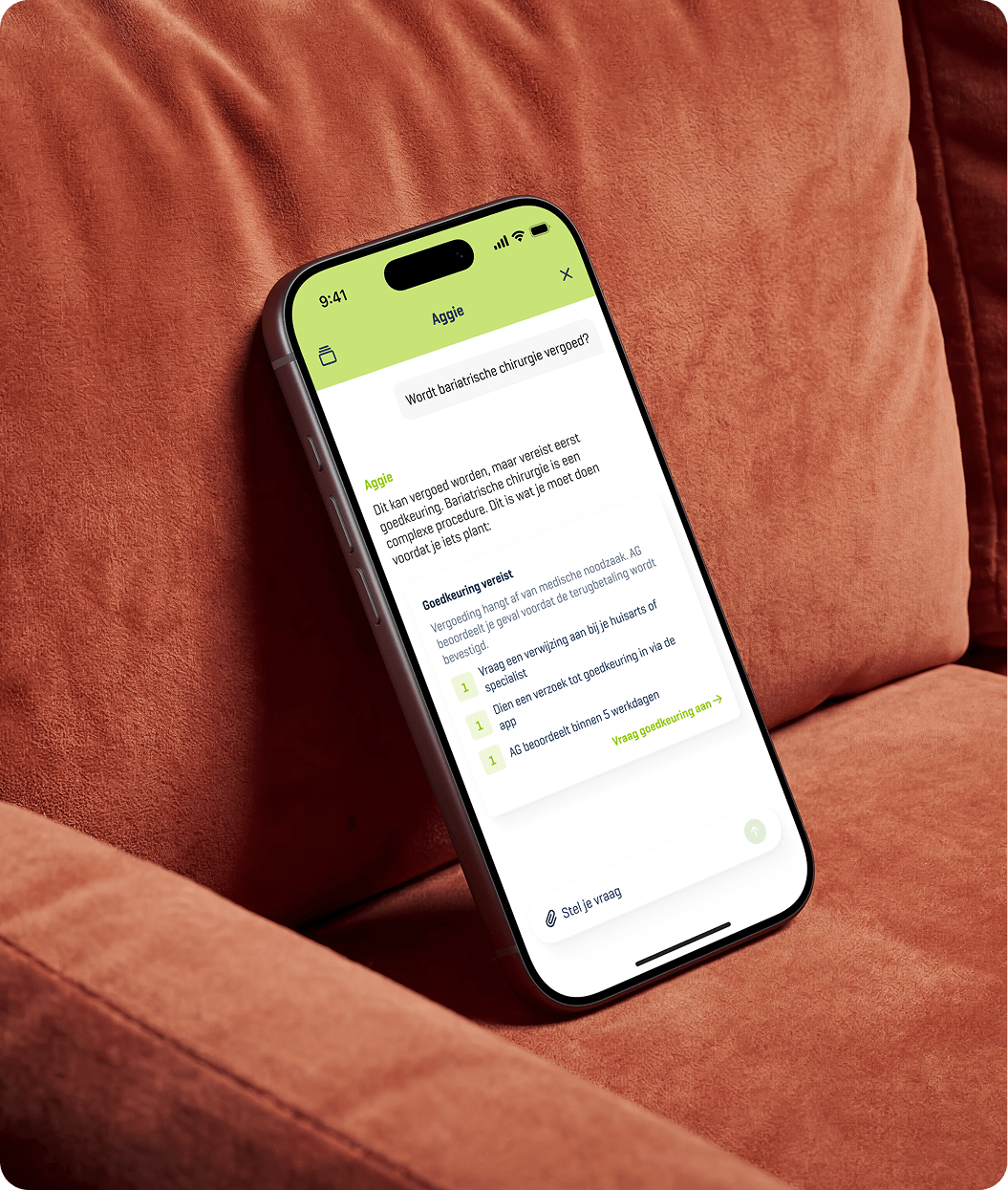
Aggie, an AI answer layer that works at three levels:
General benefit knowledge (Aggie knows)
Contract-specific personalised answers (Aggie knows you)
Human escalation with full context (Aggie hands off).
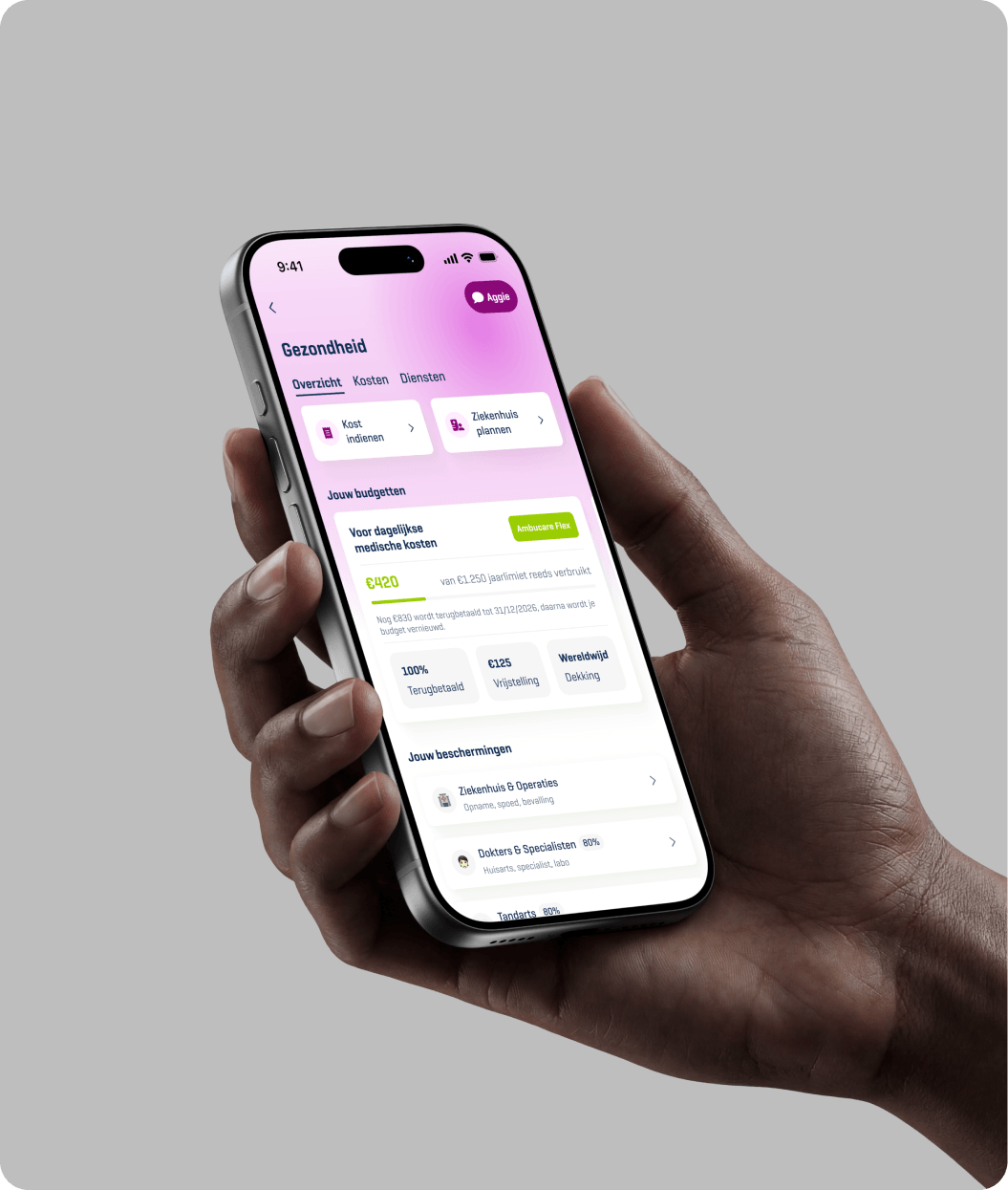
Coverage clarity
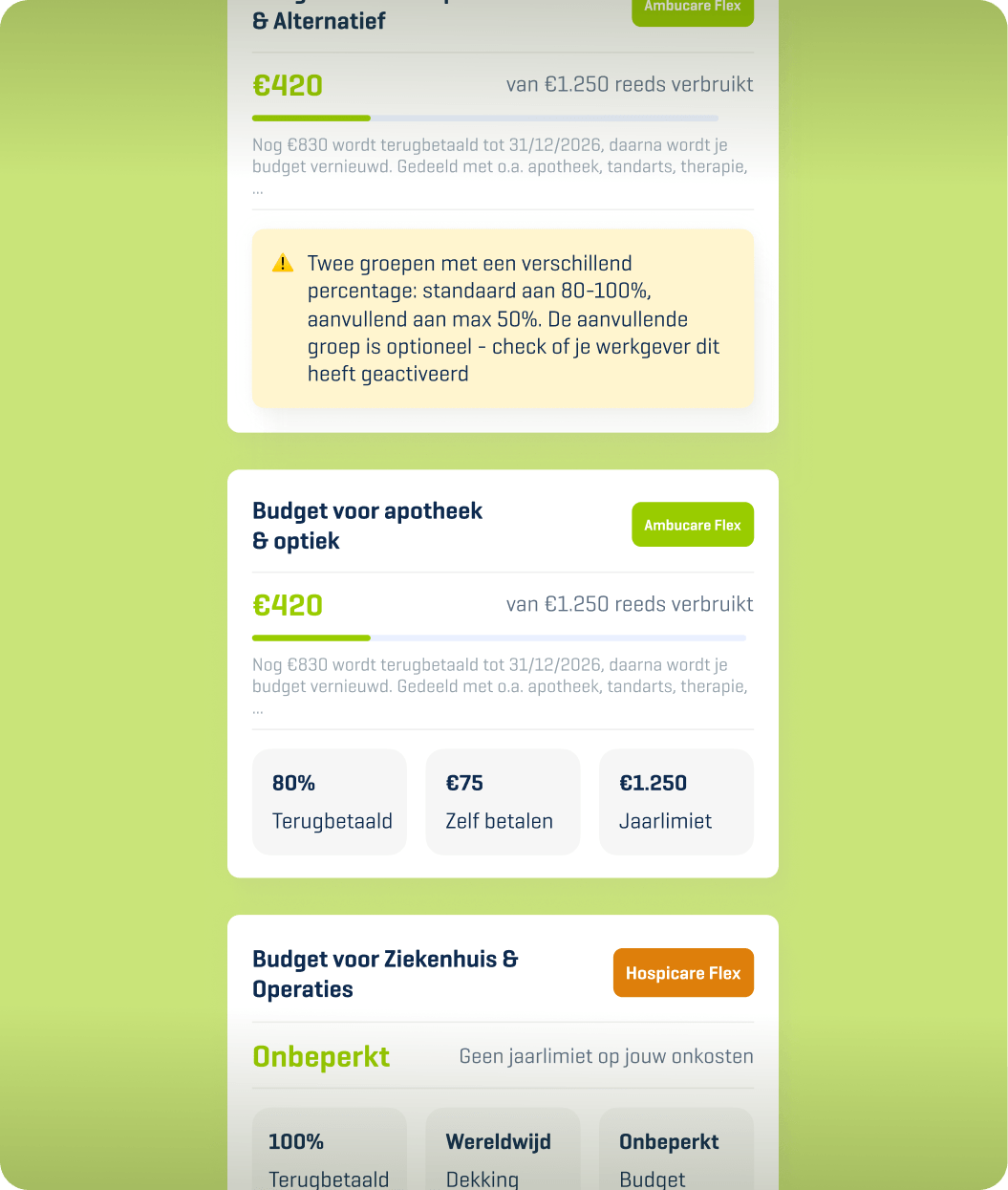
Showing people what they're covered for, in plain language, at the moment they ask.
Life event guidance
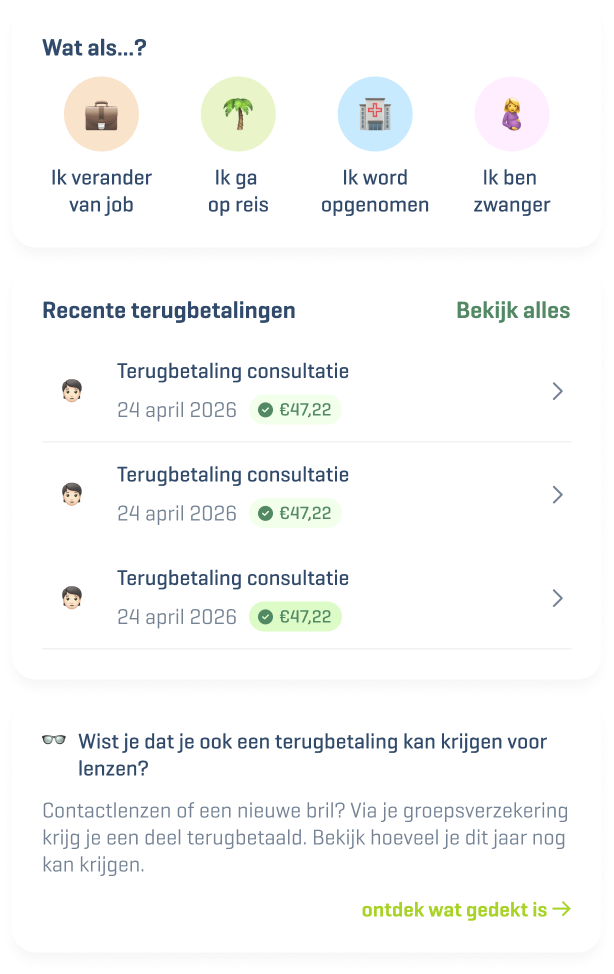
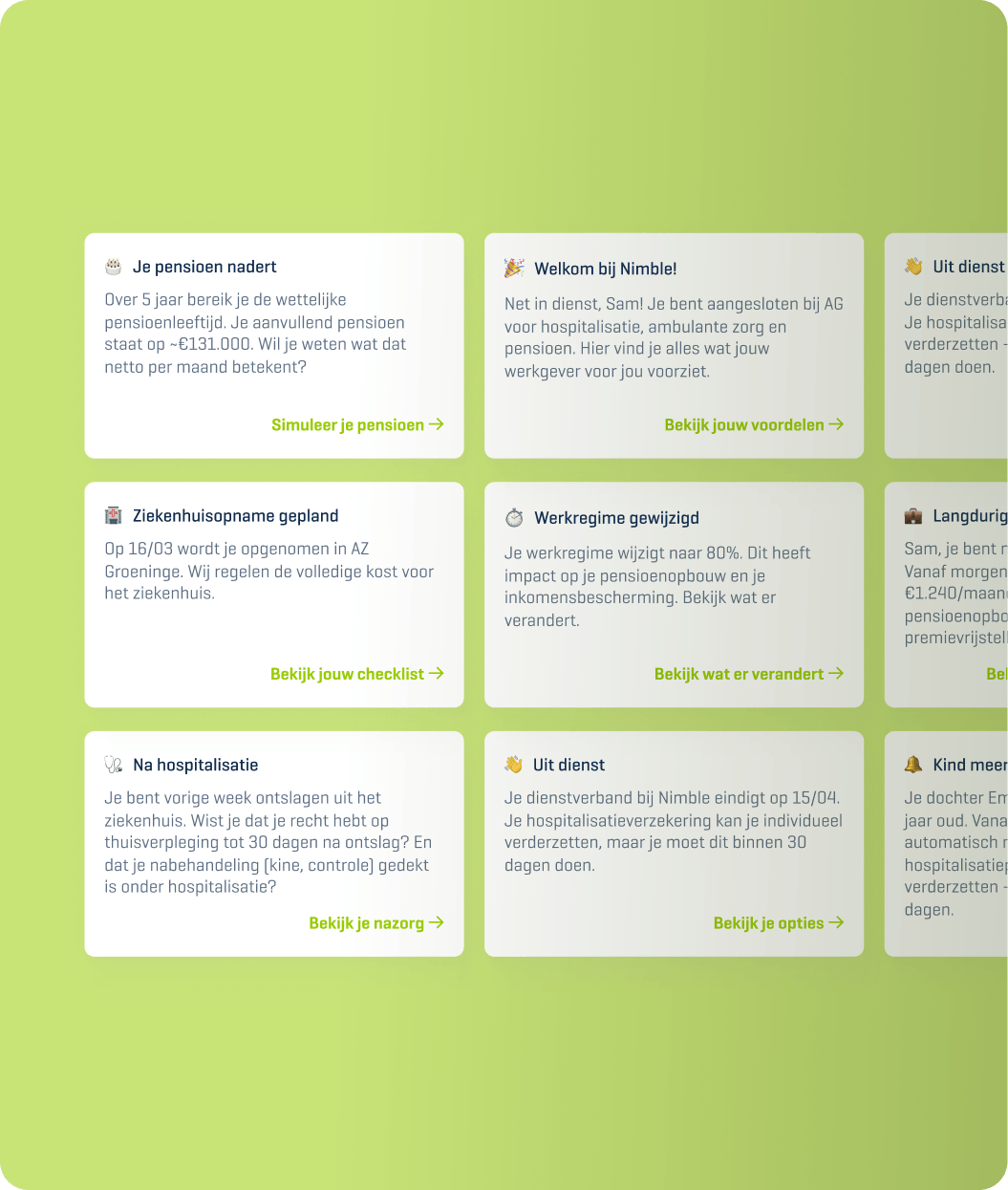
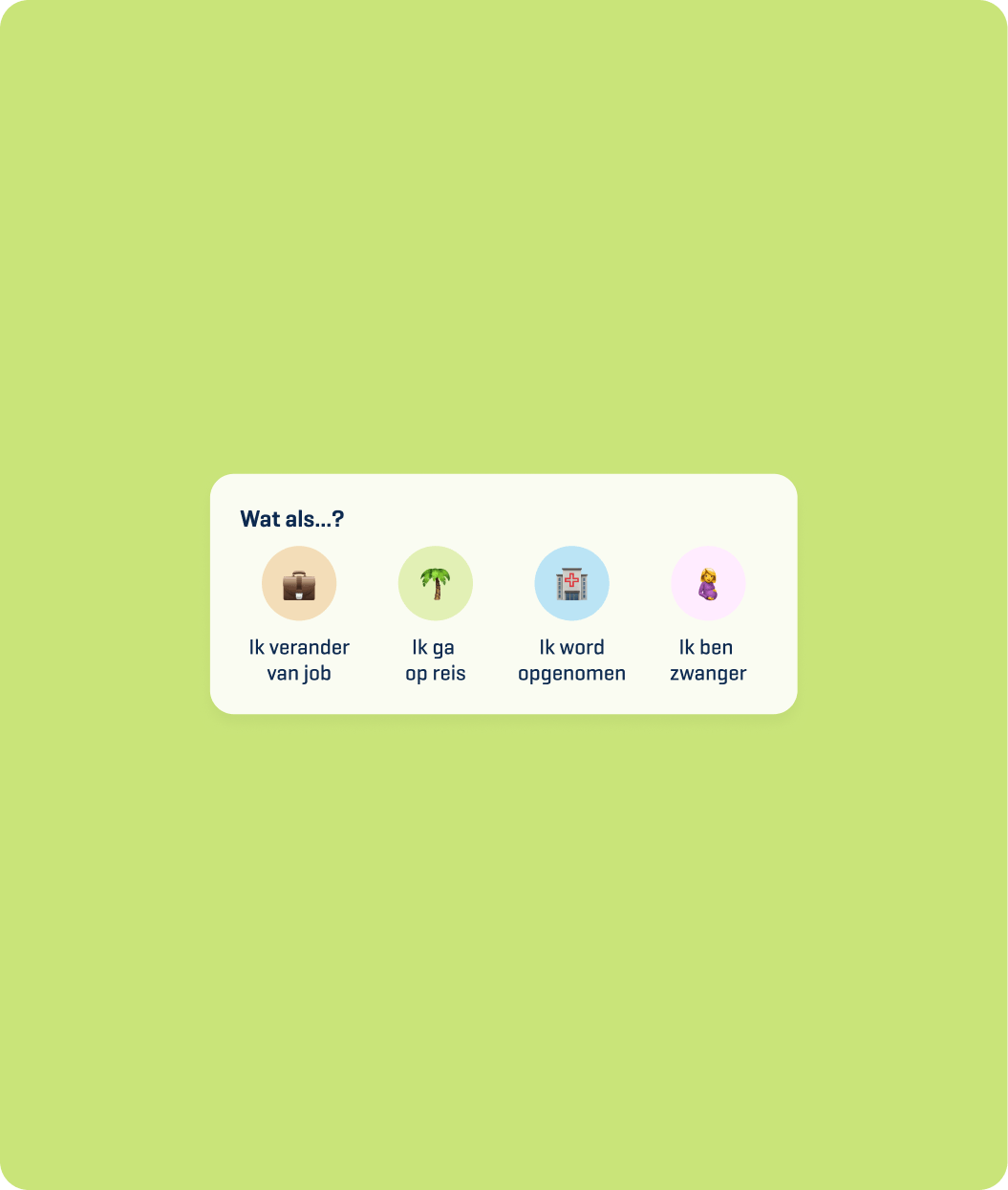
Proactive cards triggered by events like a new child, going part-time, or leaving an employer, connecting the health and pension impact in one place.
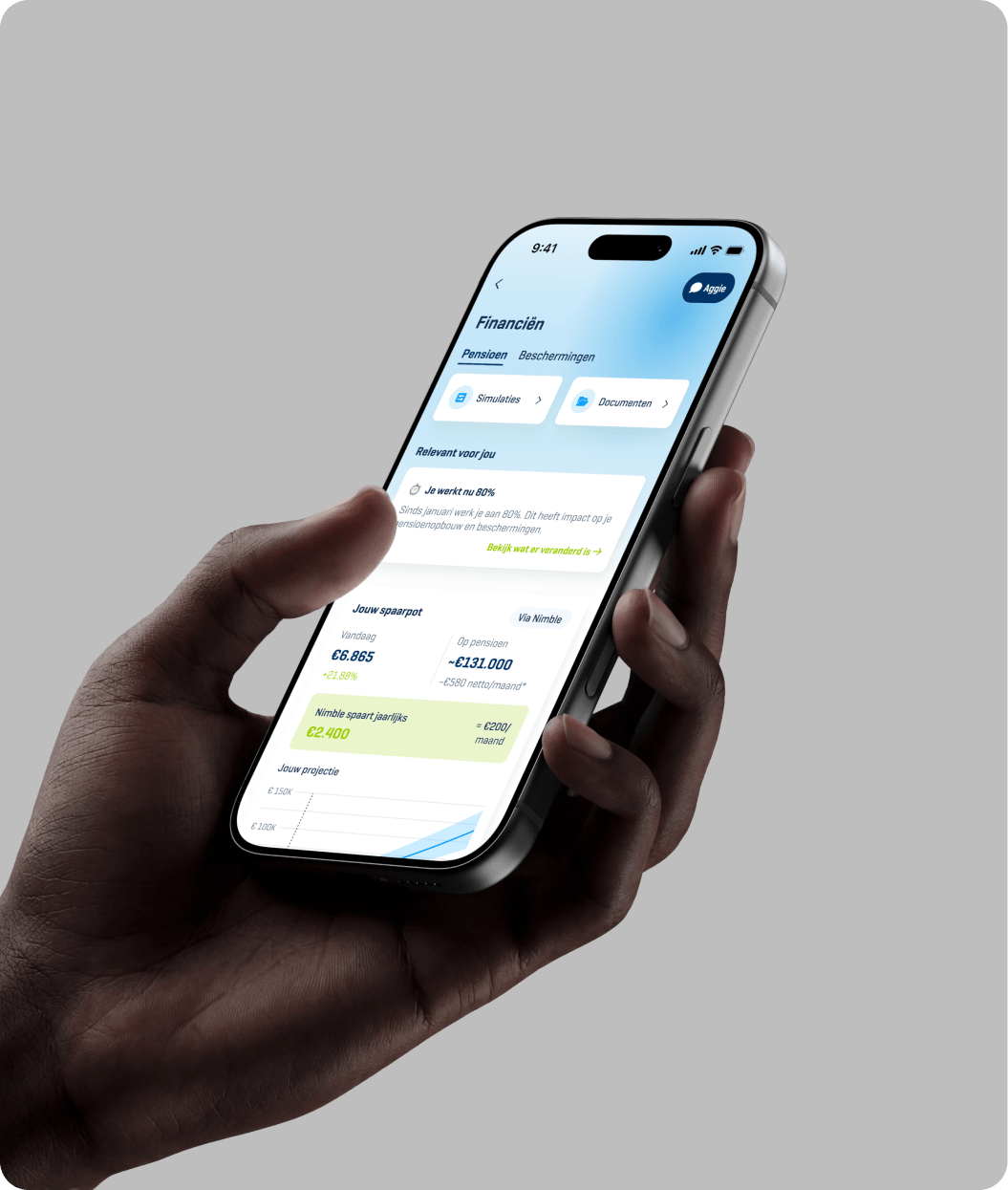
Pension storytelling
Turning a static figure into something an employee can understand and act on.
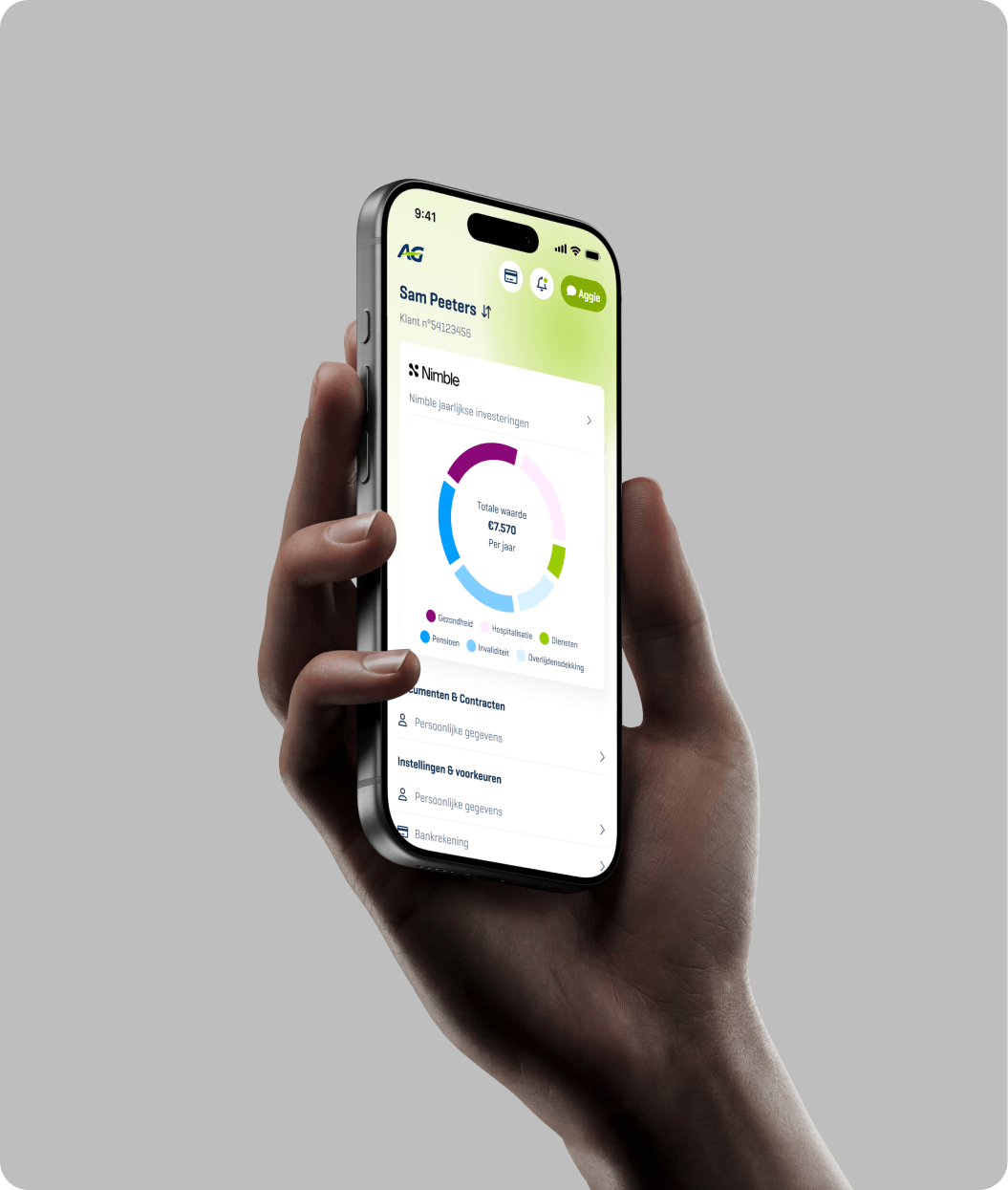
Intent-based navigation
Organising the app around user tasks (submit, ask, plan, check) instead of insurance products.
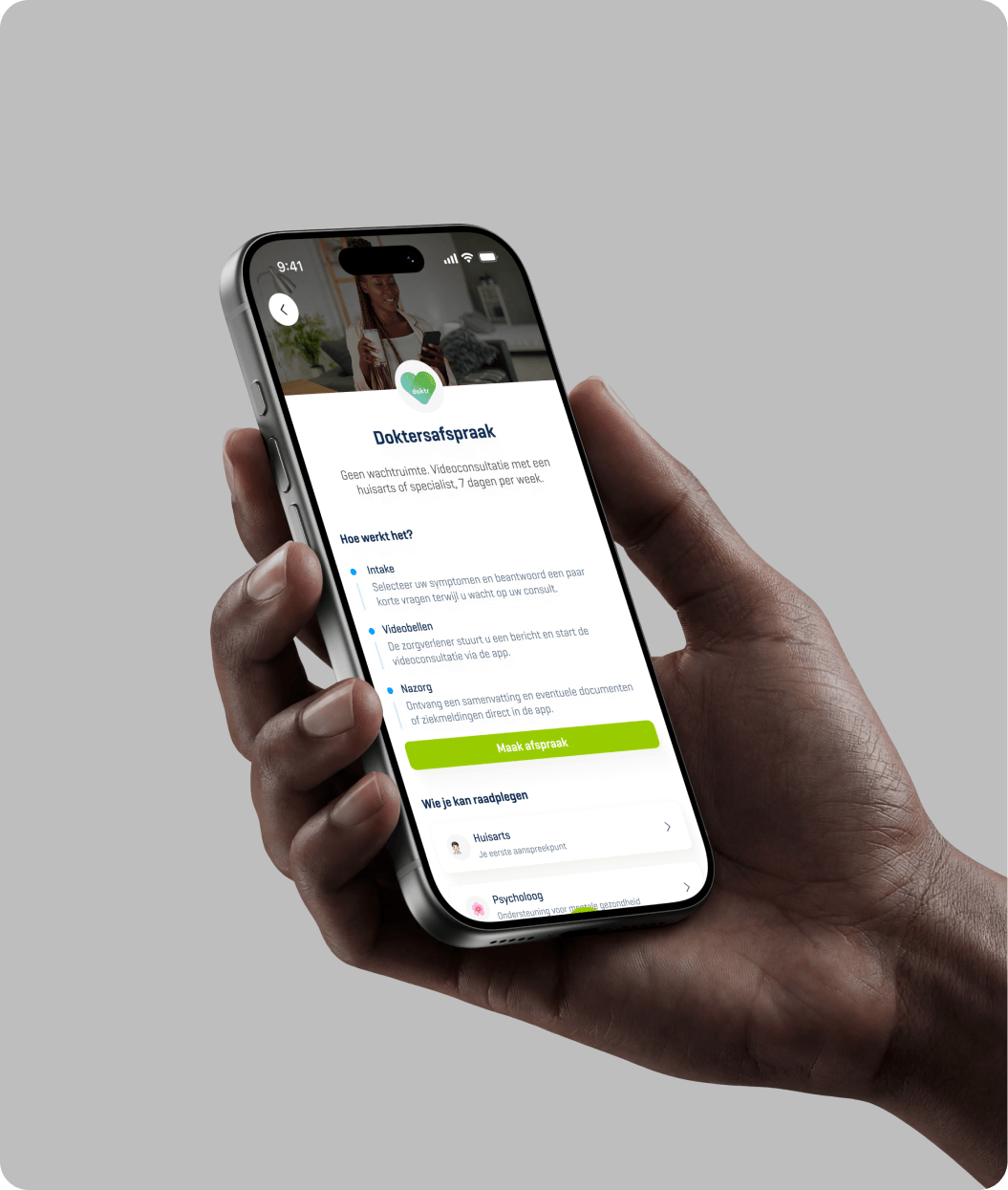
Claim resolution flow
A clear status, a timeline, and a next step for every claim. This was the gap people felt most strongly about.
opportunity
Not a platform rebuild
The discovery work set two clear boundaries. First, AG doesn't need to become a financial advisor; the opportunity here is clarity, not advice. Second, the first move doesn't depend on the backend. The recommended starting point is a focused carve-out: bring Aggie into the existing app (answers, basic personalisation, and a clean human handoff), validate it with real users, and only then commit to a full rebuild. The guiding principle throughout was simple: a smaller assistant that genuinely helps is worth more than a broad one that disappoints.

The THINKING
5 things that the discovery track taught us
1. The biggest opportunity is shifting the app's center of gravity toward the employee.
The app was originally shaped around the employer's story, which helped explain a lot of what we saw: the coverage tiles, the actuarial pension language, the under-used services section, the transactional feel.
It was built to help employers present the benefits they'd arranged, and it did that job well. The next chapter is making the employee the main character.
It was built to help employers present the benefits they'd arranged, and it did that job well. The next chapter is making the employee the main character.
2. The information gap is the single highest-signal finding.
It came up in every conversation we had, on both the AG side and the customer side. The app handles transactions well, but the moment someone has a real question (am I covered for dental?, what happens to my pension if I go part-time?), they're largely on their own.
And every unanswered question travels down the chain: employee to HR, HR to broker, broker to the AG call centre. A large share of support queries come down to billing or coverage that simply wasn't clear.
And every unanswered question travels down the chain: employee to HR, HR to broker, broker to the AG call centre. A large share of support queries come down to billing or coverage that simply wasn't clear.
3. Claims status is really a question of trust.
Not being able to follow a claim was one of the strongest frustrations we heard. When someone's income depends on a payout, being told to wait for a letter in the post isn't reassuring enough.
Every claim needs a status, a timeline, and a clear next step, which is exactly what people asked for, again and again.
Every claim needs a status, a timeline, and a clear next step, which is exactly what people asked for, again and again.
4. Bundling clearly matters to employers. Its value to employees is the open question.
None of the customers we spoke with pointed to a specific moment where seeing health and pension together made a real difference to them, and that value hadn't yet been tested or measured from the employee's side.
The interesting answer probably isn't to unbundle. It's to rebundle around life domains and life moments rather than product lines, which is the one thing a single-domain competitor can't easily do.
The interesting answer probably isn't to unbundle. It's to rebundle around life domains and life moments rather than product lines, which is the one thing a single-domain competitor can't easily do.
5. The constraint shaped the recommendation.
With the backend largely committed for 12–18 months, waiting for it wasn't the right move.
So the approach became frontend-first: a carve-out AI assistant that delivers value quickly and doubles as the foundation (authentication, knowledge base, personalisation layer, observability, handoff) for any future rebuild.
It's less a detour than a running start on the bigger work.
So the approach became frontend-first: a carve-out AI assistant that delivers value quickly and doubles as the foundation (authentication, knowledge base, personalisation layer, observability, handoff) for any future rebuild.
It's less a detour than a running start on the bigger work.
Sneak peek
What's next?
With the discovery track complete, AG and Nimble are exploring the next steps together, building on this thinking to shape how and when these ideas could come to life. More to share as that work takes shape.